French bakery culture — etiquette, ordering, daily bread

French Bakery Culture: Why “Une Baguette” Is Never Enough at the Counter

You walk in, say “une baguette,” and the baker fires back: “Tradition ou normale? Bien cuite? Coupée?” Three decisions in two seconds. This guide covers greetings, bread types, pastry orders, cultural etiquette, payment, and the common mistakes that mark you as a tourist before you finish your first sentence.

French bakery culture ordering baguettes and croissants
Boulangerie counter. Tradition or normale, bien cuite or pas trop: decide before you reach the front.

Greet first, order second: the rule nobody explains

Every bakery visit in France starts with “Bonjour.” Not the order. Not a wave. “Bonjour.” Skip it and the baker’s tone shifts. The greeting is not politeness decoration. It is a social handshake that signals you know the protocol. Students who moved to French villages report that their relationship with the local baker changed completely once they started greeting properly. The politeness guide explains why this rule applies across every French interaction, not just bakeries.

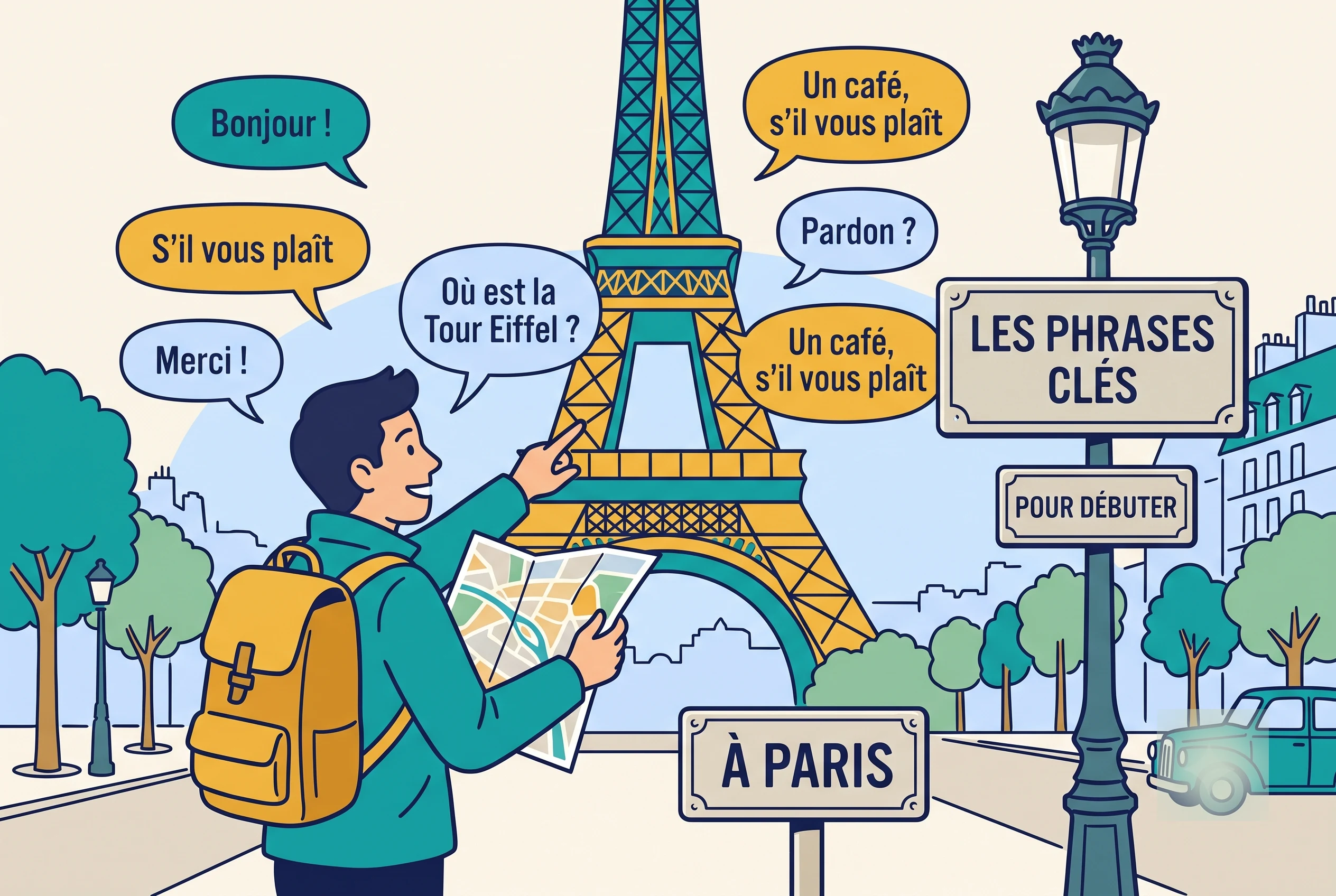
🇫🇷 Bonjour ! Je voudrais une baguette, s’il vous plaît. — Greeting + order + polite closer. The complete frame. 🇫🇷 Merci, bonne journée ! — Closing matters as much as opening. Leave without it and you have broken the loop.

The queue nobody manages

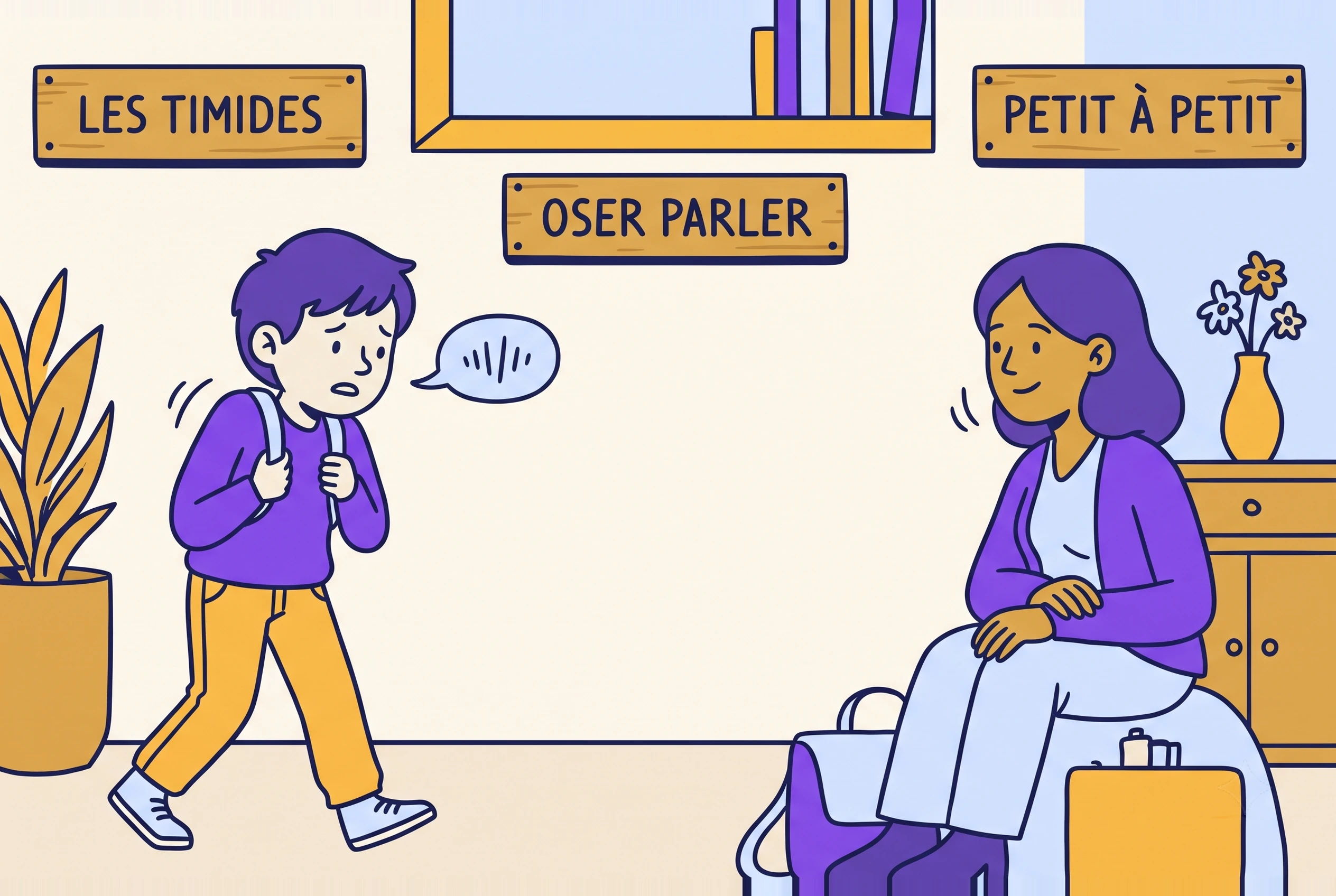
French bakeries do not have visible queues. Customers track arrival order mentally. When the baker asks “C’est à qui ?” (whose turn?), you need to know your position. Watch who arrived before you. If unsure, gesture and ask “C’est à vous ?” The shy beginners guide covers the freeze response this produces.

The bakery is one situation. The Briefing covers a new one every day.
Daily French on real topics. Same register as the counter, the café, the market.
📰 Read The French Briefing
Free. No account.

Bread types: the choices that matter

Saying “une baguette” is like saying “a coffee” in Italy. Which one? There are at least four options in every boulangerie, and the baker expects you to specify. The “tradition” baguette earned UNESCO Intangible Cultural Heritage status in 2022: four ingredients only (flour, water, salt, yeast), no preservatives, and a skill requirement that separates a great boulangerie from a mediocre one. The drinks guide covers the same specificity requirement at the bar.

🇫🇷 Une baguette tradition, s’il vous plaît. — Better flour, longer fermentation, deeper flavour. ~30 cents more. Worth it. 🇫🇷 Une baguette bien cuite. — Dark, crispy crust. Texture and crunch. The baker nods approval. 🇫🇷 Pas trop cuite, s’il vous plaît. — Softer crust, better for sandwiches. Kids prefer this.
🇫🇷 Une demi-baguette. — Not every bakery offers this. Perfect for one person. Ask first. 🇫🇷 Un pain de campagne. — Denser, darker, lasts longer. Better for cheese boards and soups. 🇫🇷 Du pain complet / aux céréales / sans gluten. — Wholemeal, multigrain, or gluten-free. All increasingly available.

Slicing. Say “Vous pouvez la couper ?” and the baker runs it through the machine. Free. Saves you from mangling the loaf at home. The pronunciation guide covers the liaison in “vous pouvez” that makes this phrase sound natural.

Pastries: where the vocabulary and the budget expand

Viennoiseries are the buttery morning pastries. Quality varies wildly between bakeries. Golden colour, visible flaky layers, butter aroma: signs of fresh, properly made product. Industrial pastries look flat and smell like nothing. The café guide covers the same pastries ordered at the table instead of the counter.

🇫🇷 Un croissant, s’il vous plaît. — A good croissant shatters when you bite it. If it bends, the bakery uses frozen dough. 🇫🇷 Un pain au chocolat. — “Chocolatine” in the south. Using the wrong word in the wrong region starts a real argument. 🇫🇷 Un pain aux raisins. — Spiral, custard inside. Less sweet than it looks. Solid breakfast choice.
🇫🇷 C’est fait maison ? — Separates artisan from industrial. Real bakers answer proudly. Others change the subject. 🇫🇷 Qu’est-ce que vous conseillez aujourd’hui ? — Bakers love this question. They point to what came out of the oven most recently. 🇫🇷 Je prends aussi une tartelette au citron. — “Je prends” is more natural than “je voudrais” for adding items.

Never touch the products. Point clearly. Let the baker handle everything. Reaching into the display is a hygiene violation that gets you a sharp correction. The restaurant guide covers the same “do not self-serve” rule at the table.

Small talk, Sunday queues, and payment

Regular customers develop real rapport with their baker. A compliment about the bread, a comment about the weather. These micro-interactions are how French neighbourhoods function. The Paris survival guide covers the same small-talk frames for every other interaction in the city.

🇫🇷 Elle sent très bon, votre baguette ! — Genuine compliment. You have just become a person, not a tourist. 🇫🇷 À quelle heure sortent les croissants ? — The insider question. Most bakeries bake in batches. Timing your visit changes the experience.

Sunday morning is a battlefield

The Sunday bakery run is a French institution. Families buy bread for brunch, croissants disappear by 9:30, and the queue extends out the door. Arrive early. Know your order before you reach the counter. This is not the moment to practise slow, careful pronunciation.

🇫🇷 Je peux payer par carte ? — Ask before they ring you up. Some bakeries have a 5-10 euro card minimum. 🇫🇷 Vous pouvez la couper ? — Free slicing. The baker runs it through the machine. 🇫🇷 Vous êtes fermés quel jour ? — Most bakeries close one day per week, typically Monday or Tuesday.

The baguette quality test

Experienced customers assess quality by squeezing gently. The crust should crack, not bend. Golden-brown colour, visible flour dusting, irregular shape: signs of hand-shaped artisan product. Uniform industrial baguettes look perfect but taste like nothing. The untranslatable words guide covers “terroir” which is exactly the concept that explains why one bakery’s bread tastes different from the next.

Study glossary: French bakery vocabulary

FrenchEnglishContext
BoulangerieBakeryLook for the official sign
Baguette traditionTraditional baguetteBetter flour, UNESCO heritage
Bien cuite / pas trop cuiteWell-baked / not too bakedCrust preference
Pain de campagneCountry loafDenser, lasts longer
Pain complet / aux céréalesWholemeal / multigrainIncreasingly common
CroissantCroissantShould shatter, not bend
Pain au chocolatChocolate pastry“Chocolatine” in the south
ViennoiserieButtery pastry categoryCroissant, brioche, pain aux raisins
Fait maisonHomemadeArtisan vs industrial check
CouperTo slice“Vous pouvez la couper?” Free.
Demi-baguetteHalf-baguetteNot always available. Ask.
C’est à qui ?Whose turn?The baker’s queue question
MonnaieChange (coins)Carry coins for small purchases

The bakery is the fastest daily French interaction. The café guide covers the seated version. The restaurant guide covers the full-course version. The train guide covers the counter-under-pressure version. “For sure.” 🕶️

Go further

☀️ The one book to buy this summer
Margaux, the FrenchToEnglish mouse
Les 21 mistakes? On les bat en jouant. 🎲

Stop making the same 21 French mistakes. Play them away.

300 pages of games, riddles and quizzes built around the 21 mistakes English speakers actually make in French. You fix them by playing, not by memorising rules. By Camille Aubert.

300 pages2,000 questions21 mistakes
$19−63% $6.99 Less than a café ☕ · yours forever
Get the Gamebook →

French pharmacy phrases — symptoms, advice, dosage, and OTC help

French Pharmacy Phrases: What to Say When You Feel Awful and Your Vocabulary Disappears

French pharmacists do not wait for you to describe symptoms in textbook order: they ask about duration, medication history, and allergies in rapid sequence. This guide covers the opening line, symptoms, dosage confirmation, OTC purchases, and the emergency phrases that keep you safe.

French pharmacy phrases at a pharmacie counter
The green cross means help, advice, and OTC medicine without a doctor visit.

Your opening line at the pharmacie

Walk in. Say “Bonjour.” Then state your problem in one sentence. The pharmacist does not need a medical history. They need the symptom and whether you want something without a prescription. French pharmacists are trained to diagnose minor conditions. They are not cashiers. They examine, advise, and sometimes refuse to sell you something if they think you need a doctor. That level of involvement catches English speakers off guard because the interaction is longer and more personal than in the UK or the US. The politeness guide explains why the conditional forms (“pourriez-vous,” “serait-il possible”) signal respect for their expertise.

🇫🇷 Bonjour, j’ai mal à la gorge. — “J’ai mal à…” is universal. Swap gorge for: tête (head), dos (back), ventre (stomach). 🇫🇷 Je cherche quelque chose sans ordonnance. — “Sans ordonnance” = OTC. Without it, the pharmacist may suggest a doctor first. 🇫🇷 C’est pour mon enfant / mon partenaire. — Specify immediately. Dosage changes for children.

The pharmacist will ask you questions

Expect: “Depuis quand ?” (since when?), “Vous prenez un traitement ?” (are you on medication?), “Des allergies ?” (any allergies?). Prepare one-word answers: “Depuis hier” (since yesterday), “Non,” “Aux noix” (to nuts). The pronunciation guide covers the chunking skills that make rapid questions comprehensible.

The pharmacy is one situation. The Briefing covers a new one every day.
Daily French on real topics. Same register as the counter, the café, the préfecture.
📰 Read The French Briefing
Free. No account.

Describe symptoms: one symptom per sentence

Keep it short. One symptom per sentence. Duration if you know it. The pharmacist will ask follow-ups. Students living in rural France consistently report that pharmacy visits are the first real-world test of their French, not because the vocabulary is hard, but because you feel terrible, the pressure is real, and there is no English fallback in a village pharmacie.

🇫🇷 J’ai de la fièvre depuis hier. — “Depuis” + time = duration. Works for everything: depuis ce matin, depuis trois jours. 🇫🇷 Je tousse et j’ai le nez qui coule. — Two symptoms, one sentence. “Et” does the work. 🇫🇷 J’ai des maux de tête. — Plural “maux” = recurring. Singular “mal” = single episode.
🇫🇷 Je me suis foulé la cheville. — Reflexive past tense. Memorize it as a fixed phrase. 🇫🇷 J’ai une réaction allergique. — This triggers priority attention. Say it clearly and first.

Confirm dosage: the safety net

Always repeat the dosage back. French pharmacists expect it. They will correct you if you have misunderstood. That correction is the safety net. The false friends guide covers the vocabulary traps where similar-looking words mean different things, which is exactly the risk with medical terms.

🇫🇷 Quelle est la dose et la fréquence ? — Listen for “fois par jour” (times/day) and “comprimé(s)” (tablet/s). 🇫🇷 Y a-t-il des effets secondaires ? — Listen for “somnolence” (drowsiness) and “éviter” (avoid). 🇫🇷 À jeun ou avec de la nourriture ? — “À jeun” = empty stomach. Critical for some medicines.

The pharmacist writes on the box

French pharmacists often write dosage instructions directly on the medicine box in marker. “2x/jour” (twice daily), “matin et soir” (morning and evening). If they do not, ask: “Pouvez-vous l’écrire sur la boîte ?” This visual backup prevents dosage errors when your French memory fades at 2 AM.

OTC purchases and service phrases

These are grab-and-go items. No consultation needed, but knowing the French name saves you from pointing at shelves. The everyday French you use in cafés follows the same polite frame: item + “s’il vous plaît.” The pharmacy just swaps coffee for medicine.

🇫🇷 Des pastilles pour la gorge. — “Pastilles” not “bonbons.” Bonbons = candy. Pastilles = medicated. 🇫🇷 Un spray nasal décongestionnant. — Nasal sprays are behind the counter. You must ask. 🇫🇷 Des pansements et une crème antiseptique. — “Pansements” = plasters/bandages.
🇫🇷 Avez-vous l’équivalent générique ? — Generics are cheaper. Pharmacists must offer them. Always ask. 🇫🇷 Où se trouve la pharmacie de garde ? — Night/weekend/holiday. Posted on any pharmacy door.

Codeine. Available OTC in the US and UK but strictly prescription-only in France. Asking for it without an ordonnance gets a polite refusal. The moving to France guide covers similar regulatory surprises.

Emergencies: when the pharmacist becomes triage

If symptoms are severe, the pharmacist redirects you. They can call a doctor, recommend urgent care, or call SAMU (15). Your job is communicating urgency clearly. The phone call guide covers voice-only emergency communication.

🇫🇷 C’est urgent, je respire mal. — “Urgent” triggers immediate attention. Do not bury it in a long sentence. 🇫🇷 Pourriez-vous m’indiquer un médecin ? — Pharmacists keep lists of nearby walk-in doctors. 🇫🇷 Faut-il aller aux urgences ? — Their answer is medical advice. Trust their triage.

SAMU: the number to know

15 is the medical emergency number in France. Not 112 (European general, also works), not 911. If you cannot speak, point to your phone and say “quinze.” One word. That is enough.

Study glossary: French pharmacy vocabulary

FrenchEnglishContext
PharmaciePharmacyLook for the green cross
Sans ordonnanceOver the counter“Je cherche quelque chose sans ordonnance”
OrdonnancePrescriptionRequired for antibiotics, codeine, etc.
PosologieDosageAlways confirm before leaving
Effets secondairesSide effectsAsk about drowsiness and interactions
AntalgiquePainkillerParacetamol, ibuprofen
PommadeOintment/creamMedical cream, not cosmetic
SiropSyrup“Sans sucre” for sugar-free
PastillesLozengesMedicated, not candy
PansementPlaster/bandage“Adhésif” for stick-on
FièvreFever“J’ai de la fièvre depuis…”
Pharmacie de gardeOn-call pharmacyNight/weekend emergencies
GénériqueGenericCheaper. Pharmacist must offer it.

The pharmacy is one interaction in the daily chain. The restaurant guide covers the seated version. The train guide covers the counter version. The shy beginners guide covers why your vocabulary disappears under pressure. “For sure.” 🕶️

Go further

☀️ The one book to buy this summer
Margaux, the FrenchToEnglish mouse
Les 21 mistakes? On les bat en jouant. 🎲

Stop making the same 21 French mistakes. Play them away.

300 pages of games, riddles and quizzes built around the 21 mistakes English speakers actually make in French. You fix them by playing, not by memorising rules. By Camille Aubert.

300 pages2,000 questions21 mistakes
$19−63% $6.99 Less than a café ☕ · yours forever
Get the Gamebook →

French restaurant booking phrases — reserve, arrive, order

French Restaurant Booking Phrases: Why Your Script Will Not Survive the Host

The host answers fast, skips your greeting, and asks two questions before you find your first word, which is why memorized scripts fail at French restaurants. This guide covers phone bookings, arrival protocol, allergies, ordering from starter to dessert, and last-minute changes.

French restaurant booking phrases Le Jules Verne Paris
Le Jules Verne, Tour Eiffel. The host expects name, party size, and time in one sentence.

Booking by phone: one sentence, four pieces of information

The phone rings twice. Someone picks up: “Bonsoir, Le Comptoir.” Full speed. You have four seconds before silence becomes awkward. Cram everything into one sentence: party size, date, time, name. No small talk. French restaurant staff parse efficiency, not politeness padding. The phone call guide covers the general pressure of voice-only French. This section covers the restaurant-specific version.

🇫🇷 Bonjour, je voudrais réserver une table pour deux, samedi à vingt heures, au nom de Martin.🇺🇸 One sentence. Four pieces of information. The host only needs to ask “en terrasse ou en salle ?”
🇫🇷 C’est possible en terrasse ? — Ask, do not assume. The host needs yes/no format. 🇫🇷 On peut venir à quatre ? — “On” is informal but standard for phone bookings. “Nous” sounds stiff here.

What the host says back

Most guides only teach what you say. The host’s reply is what derails you. Expect: “Pour quelle heure ?” (what time?), “Quel nom ?” (what name?), or “On est complet.” (we are full). If you hear “complet,” move to the next restaurant. The pronunciation guide covers the chunking skills that make fast phone speech comprehensible.

🇫🇷 Vous avez quelque chose vers vingt et une heures ? — “Vers” gives flexibility when the exact slot is taken.

Timing rule. French dinner service starts at 19h30. Booking for 18h gets a confused silence. Restaurants are not open for dinner at 6 PM in France. The café guide covers the daytime version of the same protocol.

The restaurant is one situation. The Briefing covers a new one every day.
Daily French on real topics. Same register as the host, the server, the baker.
📰 Read The French Briefing
Free. No account.

Arriving: the first thirty seconds

You walk in. The host does not smile. That is not hostility. It is neutral French service protocol. Say “Bonjour” first. Always. Then state your reservation in one line. The politeness guide explains why “Bonjour” is not optional in any French interaction.

🇫🇷 Bonjour, nous avons une réservation à dix-neuf heures, au nom de Martin.🇺🇸 Same structure as the phone booking. Name last. The host checks the book while you talk.
🇫🇷 Une table près de la fenêtre, s’il vous plaît. — Ask, do not sit. In France the host assigns tables. 🇫🇷 Nous serons trois finalement. — “Finalement” signals the change politely. Without it the sentence sounds like a correction.

That seating rule catches every American and British diner off guard. In France the table belongs to the house. The host decides. You suggest. Sitting wherever you want reads as rude in any establishment with table service.

Friday and Saturday. Walking into a French restaurant without a reservation on weekend evenings usually means no table. Smaller bistros might squeeze you in. Anything with a reputation will not. The Paris survival guide covers the walk-in alternatives.

Allergies, water, and the bread question

🇫🇷 Je suis allergique aux noix. — Swap “noix” for: gluten, fruits de mer (seafood), produits laitiers (dairy). 🇫🇷 Une carafe d’eau, s’il vous plaît. — Free. Always. By law. If they bring a bottle, say “une carafe, pas une bouteille.”

The bread question nobody asks

Bread appears without ordering. It is included. Asking “is the bread free?” marks you as a tourist faster than any accent. Take it. Use it to push food onto your fork. That is what it is for in France.

Ordering: entrée, plat, dessert

French ordering follows courses. Entrée (starter), plat (main), dessert. Jump straight to the main and you will hear “pas d’entrée ?” from the server. The false friends guide covers the entrée/main course confusion that trips every American diner: in French, “entrée” means starter, not main course.

🇫🇷 Je voudrais le menu du jour, s’il vous plaît. — “Menu du jour” = fixed-price set meal, NOT the menu card. The card is “la carte.” 🇫🇷 En entrée, la soupe à l’oignon ; en plat, le poulet rôti. — Standard frame. Use it and the server knows you understand the system.
🇫🇷 Bien cuit, s’il vous plaît. — Ordering steak “bien cuit” in France will get you a look. Order it anyway. 🇫🇷 Sans coriandre, si possible. — “Si possible” softens the request. Without it the sentence is a command. 🇫🇷 Qu’est-ce que vous conseillez ? — Servers in France take this seriously. Expect an honest opinion.

Quick win. Point to the menu if pronunciation fails. “Celui-ci” (this one) plus a gesture works perfectly at A0. The shy beginners guide covers the psychology of pointing versus speaking.

Changing or cancelling your booking

You need to move the reservation earlier, postpone it, or cancel. The call takes under a minute if you lead with the change, not an apology. The tu/vous guide applies: always vous with restaurant staff.

🇫🇷 Serait-il possible d’avancer la réservation à 19h30 ? — “Avancer” = earlier. “Reporter” = later. Mixing them books you for the wrong time. 🇫🇷 Nous confirmons pour ce soir, merci. — Some restaurants expect same-day confirmation. Skipping it risks losing the table.
🇫🇷 Je suis désolé, nous devons annuler. — Short. Direct. The host appreciates the call more than the apology. 🇫🇷 Peut-on ajouter une personne ? — Call early. Adding a guest reshuffles the seating plan.

No-show culture is different

Paris restaurants with Michelin stars or long waitlists now take credit card details at booking. Cancelling is always better than ghosting. One phone call, ten seconds of French. The drinks guide covers what happens after the food arrives.

Study glossary: French restaurant vocabulary

FrenchEnglishContext
Réserver / réservationTo book / reservationPhone or online, with party size and time
En terrasse / en salleTerrace / insideAsk; terrace fills fast in summer
Près de la fenêtreNear the windowRequest only; host assigns seating
Allergique aux…Allergic to…+ noix, gluten, fruits de mer, produits laitiers
Carafe d’eauTap water jugFree by law. Say it to avoid bottled.
Menu du jourDaily set menuFixed price. NOT the menu card.
La carteThe menu cardNot “le menu” which means set meal
Entrée / plat / dessertStarter / main / dessertCourse order. Entrée ≠ main course.
Bien cuit / saignantWell-done / rareState after dish name
Avancer / reporterMove earlier / postponeDo not mix these up
AnnulerCancelAlways better than a no-show
CompletFull / booked outIf you hear this, try next restaurant
Au nom deUnder the nameLast piece of the booking sentence

The restaurant is one interaction in the progression. The train tickets guide covers the counter version. The bakery guide covers the fastest version. The drinks guide covers what comes after the meal. “For sure.” 🕶️

Go further

☀️ The one book to buy this summer
Margaux, the FrenchToEnglish mouse
Les 21 mistakes? On les bat en jouant. 🎲

Stop making the same 21 French mistakes. Play them away.

300 pages of games, riddles and quizzes built around the 21 mistakes English speakers actually make in French. You fix them by playing, not by memorising rules. By Camille Aubert.

300 pages2,000 questions21 mistakes
$19−63% $6.99 Less than a café ☕ · yours forever
Get the Gamebook →

Buying train tickets in french — counters, machines, seats

Buying Train Tickets in French: What the Guichet Actually Expects

Most phrasebooks hand you a script for the SNCF counter, but real agents do not follow it: they fire three rapid questions before you finish your opener. This guide covers counter phrases, machine buttons, seat vocabulary, platform navigation, and what to say when plans break.

Buying train tickets in French at SNCF station
SNCF counter. One sentence with destination, date, class, and seat preference.

At the guichet: one sentence, everything inside

The counter agent expects your full request in a single phrase. Destination, date, one-way or return, class, seat. End with “s’il vous plaît.” That is not politeness decoration. Skip it and the interaction changes tone immediately. The politeness guide explains why this matters across every French interaction, not just trains.

🇫🇷 Je voudrais un aller simple pour Lyon demain matin, s’il vous plaît.🇺🇸 One sentence. Destination + time + ticket type. The agent now only needs to confirm the train number.
🇫🇷 Un aller-retour pour Bordeaux ce week-end, en seconde, avec réservation.🇺🇸 A return to Bordeaux this weekend, second class, with reservation. “Avec réservation” costs a few euros on TGV routes. Without it, you risk standing for three hours.
🇫🇷 Deux billets pour Marseille, le 15 juin, en première.🇺🇸 Two tickets to Marseille, June 15th, first class. Specify quantity first. Agents hear “un” by default.

What phrasebooks skip

Most guides teach “Je voudrais un billet” as the opener. Real agents do not wait for it. They see you approach and say “Bonjour, où allez-vous ?” Your rehearsed script just became irrelevant. Prepare to answer directly: “Lyon, demain matin, aller simple.” That is the real A1 skill. The shy beginners guide covers the freeze response this produces.

The guichet is one situation. The Briefing covers a new one every day.
Daily French on real topics. Same register as the train counter, the café, the bakery. Quiz included.
📰 Read The French Briefing
Free. No account.

Ticket machine vocabulary: the buttons in French

Most SNCF machines offer English. But pressing the Union Jack feels like giving up, and the French menus teach you more than any textbook. The vocabulary is consistent across every borne in the country.

🇫🇷 Aller simple / Aller-retour — First two buttons. “Simple” is your friend at A1. 🇫🇷 Départ / Arrivée — Machine asks departure first. Type three letters and select. 🇫🇷 Valider / Annuler — Green = confirm. Red = cancel. Annuler resets everything.
🇫🇷 Tarif normal / Tarif réduit — No discount card? Tap “Tarif normal.” Tapping “réduit” without a card loops you back. 🇫🇷 Insérer votre carte bancaire — Contactless on newer machines. Chip insertion on older ones.

Speed tip. Use the physical keyboard below the screen to type your destination. Three times faster than the touchscreen letters. Most travelers do not notice it exists.

Seats and coaches: côté fenêtre, côté couloir

Seat preference uses “côté” (side). Window is côté fenêtre. Aisle is côté couloir. That is the entire system. No complicated grammar. The tu/vous guide applies here: use vous with the agent, always.

🇫🇷 Une place côté fenêtre, s’il vous plaît. — Window seat. On TGV Duplex, upper deck fenêtre = better views. 🇫🇷 Une place côté couloir. — Aisle seat. Couloir is /kulwaʁ/, not “cool-war.”
🇫🇷 En première / en seconde. — First / second class. Use “seconde” not “deuxième” on trains. Deuxième marks you as a textbook speaker. 🇫🇷 Avec réservation / sans réservation. — TGV requires reservation. TER does not. Knowing the difference saves you money.

Platform numbers and ticket validation

The departure board says voie 14. The platform sometimes changes ten minutes before departure, announced in French only. The pronunciation guide covers the liaison and chunking skills that make station announcements comprehensible.

🇫🇷 Le train pour Lyon part de quelle voie ? — “Voie” = track (what the board shows). Not “quai” (physical platform). 🇫🇷 C’est bien le train pour Strasbourg ? — Ask anyone on the platform. French commuters answer reflexively. 🇫🇷 Quelle voiture ? — Your slip says “voiture 12, place 43.” Voiture = coach. Place = seat.

Composter: the rule everyone gets wrong

Yellow composting machines still exist in some regional stations. Paper TER ticket? Look for the small yellow box near the platform entrance. E-tickets and QR codes never need composting. TGV tickets purchased online never need it. The confusion comes from guides written before 2019. The moving to France guide covers the broader administrative vocabulary where similar outdated rules persist.

When plans break: delays, changes, missed connections

Trains get delayed. Connections get missed. This is where A1 vocabulary meets real pressure. The phone call guide covers the same pressure in voice-only situations.

🇫🇷 Le train est en retard ? — Drop the inversion. Rising intonation on the statement sounds more natural. 🇫🇷 Puis-je échanger ce billet ? — “Puis-je” is formal but appropriate with a stressed agent. 🇫🇷 Un remboursement est possible ? — Prem’s tickets: no refund. Flexible: full refund.
🇫🇷 Ma correspondance est ratée à cause du retard.🇺🇸 I missed my connection because of the delay. This single sentence gets you rebooked. SNCF owes you a seat on the next service. Walk to the guichet. No extra charge.

The SNCF Connect app shows delays and platform changes in real time. Set it to French. The notification vocabulary reinforces exactly what you hear in the station. The café guide covers the waiting time between trains.

Study glossary: French train vocabulary

FrenchEnglishContext
GuichetTicket counterFull request in one sentence
BorneTicket machineSelf-service, 24/7
Aller simple / aller-retourOne-way / returnCounter, machine, or app
Première / secondeFirst / second class“Seconde” not “deuxième” on trains
RéservationReservationMandatory TGV, optional TER
Tarif normal / réduitFull price / discountNeed a valid card for réduit
VoiePlatform/trackCan change late. Check the board.
Voiture / placeCoach / seat“Voiture 12, place 43”
Côté fenêtre / couloirWindow / aisleThe only seat preference system
ComposterValidatePaper TER only. E-tickets never.
RetardDelay“Le train est en retard ?”
CorrespondanceConnection“Ma correspondance est ratée”
Échanger / remboursementExchange / refundDepends on fare type

The guichet is one interaction. The restaurant guide covers the seated version. The bakery guide covers the fastest version. The Paris survival guide covers all of them together. “For sure.” 🕶️

Go further

☀️ The one book to buy this summer
Margaux, the FrenchToEnglish mouse
Les 21 mistakes? On les bat en jouant. 🎲

Stop making the same 21 French mistakes. Play them away.

300 pages of games, riddles and quizzes built around the 21 mistakes English speakers actually make in French. You fix them by playing, not by memorising rules. By Camille Aubert.

300 pages2,000 questions21 mistakes
$19−63% $6.99 Less than a café ☕ · yours forever
Get the Gamebook →