
DELF B1 Sample Papers: Where to Start and How to Use Each Attempt
DELF B1 sample papers help you understand task instructions and practise under stated conditions. Use official examples, keep answers hidden during a first attempt and turn the correction into focused work on the skills you need next.
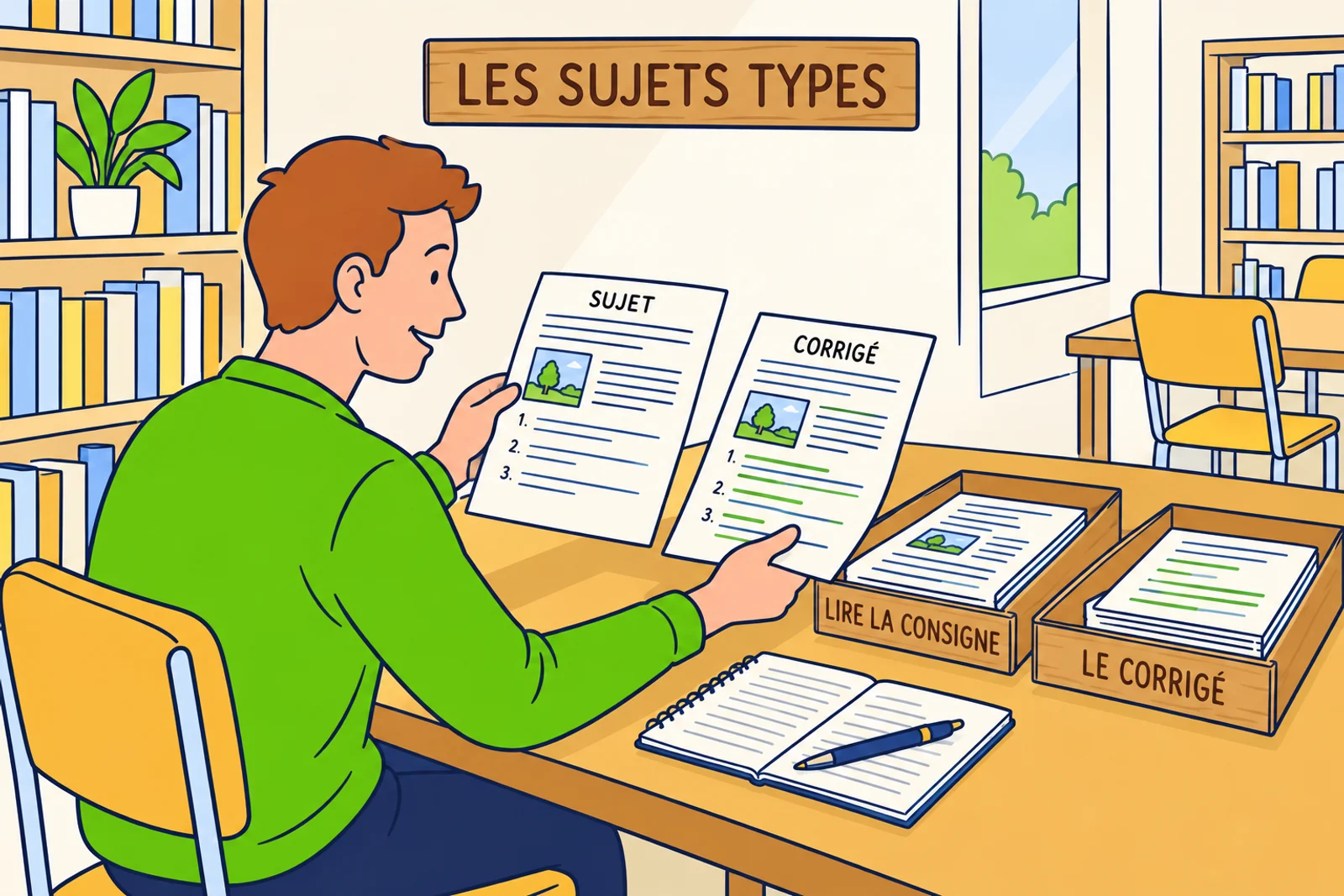
A sample paper is useful twice in different ways. On a first attempt, it can reveal what you do under the stated conditions. During review, it becomes learning material. Mixing those uses makes a score harder to interpret, especially once you remember the answers.
Begin with the official France Éducation international B1 page, which links to candidate resources and examples. Keep each paper with its matching audio and correction material. Do not assume that files downloaded from different places belong together.
For an overview of the exam, read the DELF B1 guide.
Keep a resource register
Record the source, exam version, paper reference and whether you have seen it before. Add the location of the matching audio and answer key. A simple table prevents accidentally treating a familiar paper as a fresh diagnostic.
Use the original provider's current page when possible. Older material can still contain useful language practice, but its layout and instructions may differ from other examples. Do not assert that every older format is invalid or that any random download represents your forthcoming session. Check the current official guidance and your centre where needed.
Link to official material rather than reproducing whole papers in your notes for distribution. The exercises in this article are original study suggestions, not official exam questions.
Begin at the official source, then identify the files
Use the FEI page linked above to locate the relevant B1 tout public examples and candidate information. Check the level and version rather than downloading a file solely because its filename contains B1. Keep the original source address with the material so you can return to it when a question arises.
Identify which file is for the candidate, which contains corrections and which audio belongs to the exercise. Do not assume that similar-looking downloads from different pages form one complete set. A mismatched recording or key can create confusion that has nothing to do with your language ability.
Before a first attempt, open only what you need to confirm the candidate material and technical setup. Keep answer material closed. If you accidentally see an answer or have used the paper before, record that fact rather than trying to treat the attempt as completely unfamiliar.
Use a register with practical columns
Create columns for source, level and version, paper reference, matching audio, correction location, date attempted and familiarity. Add a short note about the purpose of the next use: first attempt, supported review or replay. The register should make the material's role obvious at a glance.
For a fictional entry, you might write that a sample was attempted once and its transcript studied afterwards. Its next use can be language review, while another unfamiliar sample remains reserved for a later check. The label protects you from interpreting both results in the same way.
Keep the register private and simple. You do not need to distribute official papers as part of a public study bundle. Link to the original provider for access and use your own notes, prompts and reflections for the learning sequence you create.
Distinguish current guidance from a file's age
An older sample may still contain useful French practice, but you should not infer its relationship to your forthcoming sitting from the date alone. Compare the current official guidance and the instructions on the material. Ask the centre about practical arrangements specific to your registration when needed.
Avoid two unsupported shortcuts: declaring every older sample unusable or assuming every downloadable file exactly represents your session. The right question is what the official source says the material is and what purpose you are using it for.
For your register, note any difference you have actually observed, such as a layout or instruction. Do not invent an exam change to explain a difference you have not verified. You can still use a text for language practice while being precise about what it does and does not establish.
Keep first attempts and study copies separate
Save the uncorrected answer sheet or response before making changes. Use a separate file or clearly different annotation for review. This lets you return to what happened during the attempt instead of seeing only the corrected version later.
Name the copies by purpose and date in your private folder. A simple distinction such as first attempt and review is enough. Avoid including unnecessary personal identifiers in filenames, especially if you may share a practice response with a teacher.
If you ask for feedback, supply the correct version and explain its conditions. A revised response with dictionary and teacher support is useful evidence of revision, but it answers a different question from the original independent attempt.
Choose a manageable amount of material
Do not begin by downloading every file you can find and scheduling a new full paper every day. Start with enough material for an attempt, a careful review and targeted work between checks. The sequence matters more than the size of the folder.
Preserve suitable unfamiliar material where possible. Once you know a sample's answers, it remains useful for study, but it no longer offers the same first-encounter experience. The register makes that limitation visible without dismissing the value of review.
If you run short of unfamiliar official samples, use original or appropriate independent exercises for targeted practice. Label them accurately. They can help with a specific skill without being represented as official papers or calibrated predictors of your examination result.
Protect the first attempt
Before starting, read the conditions and prepare what the task needs. Do not open the correction file or transcript in advance. If you interrupt the attempt or use help, record it honestly. The work remains useful; it simply answers a different question from an uninterrupted simulation.
After finishing, write a quick observation before seeing the answers. Which sections felt rushed? Which instruction was unclear? Where did you guess? Those notes capture information that can disappear once you see the correct answer.
That is a more useful starting point than “reading is bad”. It tells you where to investigate.
Decide the purpose before opening the paper
Write whether this is a simulation, a supported learning session or a review of familiar material. For a simulation, follow the sample's stated conditions. For learning, use the support that serves the task and record it. The distinction helps you interpret the result without treating one mode as the only worthwhile way to study.
If you need to pause for an interruption, note it. If you consult a dictionary or transcript, note that too. You can still learn from the work, but a timing or comprehension conclusion should reflect those conditions rather than an idealised version of the attempt.
Choose the review time in advance if possible. A first attempt without later inspection may leave the most useful information unused. The purpose is not only to discover a score; it is to identify the task that deserves attention next.
Check technical access without studying the answers
Ensure that the candidate file opens and the appropriate audio can be played. Use the resource's instructions to prepare the task. Keep the correction and transcript closed until the intended attempt is finished. A technical rehearsal and a language attempt should not accidentally merge through opening the wrong file.
If audio fails, resolve the issue or choose another appropriate time or format. Do not interpret a silent recording as poor listening performance. Similarly, a display problem that hides part of the question affects the conditions and should be recorded before drawing conclusions.
For a later study session, technical support can make the material easier to inspect. You may pause or replay a short phrase deliberately. Label that work as supported review rather than overwriting the conditions of the earlier attempt.
Capture uncertainty before seeing the key
At the end of the attempt, note the items you guessed and the sections that felt rushed. Keep the observation brief so it records the experience while it is fresh. Once you see the answer, the original uncertainty may become harder to remember accurately.
Write the reason for one guess if you can. Perhaps two options seemed plausible because you missed a condition. Perhaps you recognised a word but not the speaker's intention. These notes give the review a starting point beyond a list of incorrect answers.
Do not invent a reason after the fact if you cannot recall it. Mark the uncertainty and inspect the item carefully. A later changed example can help test a hypothesis about the cause. Honest incomplete notes are more useful than a confident explanation created only after reading the key.
Preserve what the first response actually said
For writing, save the text before editing. For speaking practice, keep a recording when appropriate and note the prompt and support used. If a partner supplied words or reformulated repeatedly, that context belongs in the record.
Review can produce a much better response, and that improvement is worth keeping. It should not erase the baseline. Comparing the two versions helps you identify what the feedback changed and what you may need to practise independently on another task.
If you share the response for feedback, include the original prompt. Without it, a reviewer may comment on grammar while missing that the answer did not address a required point. Task context is essential to understanding the performance you want help with.
Do not turn every attempt into a prediction
A sample is a limited observation under stated conditions. It can reveal useful strengths and gaps without guaranteeing a later result. Familiarity, support and the particular task all affect what the attempt shows. Keep those factors visible when discussing readiness.
Use several kinds of evidence over time and seek informed feedback on open tasks. A self-marked reading paper and an impression of a spoken answer do not have identical reliability or meaning. Do not average unlike observations into a precise-looking result that the material does not justify.
The practical question after the attempt is what to study next. A specific answer to that question makes the paper useful even when the score is disappointing or difficult to interpret. The following review method focuses on that next action.
Review the reason for each error
For comprehension, use the matching correction and locate the evidence in the source. Identify why your chosen answer was attractive and which detail rules it out. When the task uses a particular marking scheme, follow that scheme rather than inventing partial credit.
For writing and speaking, use the official assessment resources and seek qualified feedback where possible. A sample answer can illustrate an approach, but it does not make every different response wrong.
Create a repair task. If you missed a condition, practise identifying conditions in a new short text. If you confused two words, compare their uses in context. If you misunderstood the prompt, practise extracting audience and purpose before composing another answer.
Find the evidence for a comprehension answer
Use the matching key, then return to the source text or recording. Identify the detail that supports the answer and explain the connection. A shared keyword is not enough if the sentence changes, rejects or qualifies the idea in the option.
For original practice, imagine a notice saying an activity is free but advance booking is compulsory. The price and booking conditions are separate. An answer that says no booking is needed because the activity is free confuses the relationship between them.
Write the relevant distinction in your own words. Then create or find a checked short example with changed conditions. This gives the next exercise a clear purpose and helps you investigate whether the misunderstanding was tied only to the original wording.
Explain the attractive wrong answer
Choose one incorrect response and describe why it seemed plausible. You may have selected the first date mentioned, overlooked a negative or interpreted a word in its more familiar sense. Keep the explanation connected to the actual text rather than using a broad label such as careless.
Compare that reasoning with the key and source. Which detail should have changed the decision? Mark it and explain its effect. This gives you a specific reading or listening operation to practise, such as distinguishing an initial proposal from the final arrangement.
If the correction is unclear, keep the full item and seek a reliable explanation. Do not invent a rule merely to make the review feel complete. An unresolved question can remain visible while you work on another checked example.
Separate sound recognition from vocabulary knowledge
For a missed listening phrase, look at the transcript after the attempt. If you understand it immediately in writing, the difficulty may involve recognising the spoken form. If the written phrase is also unfamiliar, vocabulary or meaning needs attention too.
Replay the short relevant portion for learning and compare it with the transcript. Then listen without looking. Use an appropriate model or teacher for help if the sound remains unclear. Keep this supported study distinct from the original permitted-listening result.
Choose the next exercise accordingly. A sound contrast calls for listening work, while an unfamiliar expression may need a meaning check and examples. Adding a long list of written translations to every listening error would not address all these causes equally well.
Review writing with the prompt beside it
Begin with recipient, purpose and required content. Mark where the response addresses each point. A grammatically polished paragraph can still be irrelevant or omit something requested, so task review should not disappear beneath sentence-level corrections.
Then inspect organisation, the relationship between reasons and examples and recurring language patterns. Use the official assessment resources as the reference for what evaluation concerns, and obtain qualified feedback when possible. A personal checklist supports learning but does not automatically yield an examiner-equivalent score.
Choose one section to revise and explain the change. Preserve both versions. Later, use another prompt to see whether the feedback guides a new response, rather than only producing one corrected text you have practised repeatedly.
Review speaking as interaction where the task requires it
Listen for whether the response addresses the other person's contribution. Did you answer the question asked, react to an alternative and clarify a misunderstanding? A fluent prepared opening does not answer these questions by itself.
Select a short moment for review. Identify whether the problem was a missing word, unclear idea or misunderstood question. Prepare a checked improved version, then use it in a changed fictional situation so the practice is not limited to memorising the exact repair.
Seek informed feedback when needed and keep the original task with the recording. An isolated extract may not show what the speaker was asked to do. The goal is a concrete next exercise based on the exchange, not a confident mark inferred from a few seconds of speech.
Use a four-week study cycle
This is a suggested organisation cycle for someone already working toward the exam. It is not a promise to reach B1 in four weeks.
| Week | Main purpose | Evidence to keep |
|---|---|---|
| 1 | Attempt and diagnose | First answers, conditions, uncertainty notes |
| 2 | Repair selected gaps | Changed examples and explanations |
| 3 | Practise production and interaction | Written draft and spoken recording |
| 4 | Check with unfamiliar material where available | New attempt and comparison of error types |
Repeat the cycle or lengthen a phase if the evidence calls for it. Do not spend all available official material simply to create a weekly score. Targeted practice can happen with original prompts between sample checks.
The 26-session preparation framework offers ideas for those intermediate sessions.
Week one: attempt and choose priorities
Use a suitable sample and preserve the first answers, conditions and uncertainty notes. Review enough material to identify a few meaningful difficulties. Do not try to repair every possible issue immediately. Select two priorities with a clear next exercise.
One priority might concern understanding conditions in a text, while another concerns covering every requested point in writing. Those observations can guide different sessions. Keep the evidence that led to each priority so you can later judge whether the explanation still fits.
If the sample reveals much broader gaps, adjust the cycle rather than forcing the original calendar. The four-week layout is an organisational suggestion for someone already preparing, not a promise that any starting point can become exam-ready within the same period.
Week two: repair the selected difficulties
Use small checked exercises to inspect each priority. For a reading condition, compare short notices with changed requirements. For a writing omission, analyse prompts and map each requested point before drafting. The exercise should make the target skill visible.
Keep a record of the attempt and correction. If the exercise does not address the observed cause, change it. Repeating a familiar activity because it is convenient can consume time without answering the question raised by the sample.
End the week with a changed example. It need not be another full paper. The purpose is to see whether the specific operation is available beyond the first memorised item and decide what support remains useful.
Week three: produce and obtain feedback
Write an appropriate response and practise a spoken task linked to your priorities. Preserve the initial versions and the prompts. Where possible, obtain feedback from someone who understands the relevant task and current assessment criteria.
Ask for a specific observation rather than only a score. Which requested point is missing? Where does the argument become unclear? Which response failed to address the proposal? These questions lead naturally to a revision or another short exercise.
After revising, explain what changed and why. Then try a different prompt or reply that requires the same skill. This gives you evidence about using feedback, while keeping the polished revision separate from an independent new attempt.
Week four: check and choose the next cycle
Use appropriate unfamiliar material where available and record the conditions. Compare the kinds of errors with the earlier attempt, not only the totals. Look specifically for the difficulties you targeted during weeks two and three.
If a problem persists, refine the diagnosis and seek help where necessary. If it improves, keep a small review and choose another priority. The next cycle should follow the evidence rather than repeat the same four weeks automatically.
Keep some suitable material for future checks when possible. If you reuse a familiar sample, label it as such and use it for review. You can still benefit from it without claiming that remembered answers provide the same evidence as a first encounter.
Adapt the cycle to fewer or more available sessions
If you have limited time, reduce the amount of material within each phase rather than deleting review entirely. One carefully examined task can produce a useful next action. A rushed stack of papers may leave every error unexplained.
If you have more time, add appropriate practice and feedback instead of simply taking more full tests. The cycle needs enough space between checks to address what the previous attempt revealed. More scores alone do not necessarily explain the cause of a difficulty.
Keep the calendar flexible around feedback and real obligations. A session that depends on a teacher's response can move while another independent task continues. The organisation should support learning, not become a rigid sequence that stops whenever one answer is delayed.
Know what free papers do not provide
Official samples provide exam tasks and associated resources. They do not automatically create a personal study sequence, explain every individual language gap or supply teacher feedback on your performance. Those are separate needs.
You can build your own sequence from your error log, work with a teacher or use a paid preparation resource.
Decide whether the gap is material, explanation or feedback
If you need more examples of a known task, additional suitable material may help. If you cannot understand why an answer is correct, you need an explanation. If you cannot judge an open response, you may need informed feedback. These needs are related but not interchangeable.
Do not buy a large question collection solely because a writing response needs individual review. Equally, a one-off correction may not supply the ongoing structure you want for independent sessions. Identify the gap first, then choose the form of support that actually addresses it.
You can combine free official samples, a personal error log, independent practice and a teacher. Each has a role. Keep the role visible so that a commercial activity's points do not become an invented DELF score or a sample answer become the only acceptable way to express an idea.
Check what an independent kit includes
Read the current product description and preview before choosing the linked kit. Its written mission structure is separate from official FEI sample papers. Audio files and individual marking are not included, so plan those forms of support separately if they are part of your preparation needs.
The twenty-six missions described by the product are also distinct from the original twenty-six-session framework on this site. Similar counts do not mean the free article reproduces the paid contents. Use each according to its stated purpose and avoid confusing a study schedule with a product specification.
If the format fits your routine, the kit can provide additional organisation and written practice. If you mainly need a precise explanation or a review of speech, obtain that support directly. The useful purchase is the one connected to an observed need, not an assumption that paying automatically resolves every gap.
Keep your conclusion about progress narrow and useful
After a cycle, state what the evidence supports. You may now identify a condition more reliably, cover requested writing points more consistently or respond to alternatives more clearly in the tasks attempted. These are useful observations without becoming guarantees about a future sitting.
Record unresolved questions with the examples needed to answer them. Bring a prompt, original response and conditions to a teacher when appropriate. This makes further feedback efficient and prevents a broad concern about readiness from hiding a concrete language or task issue.
The next paper should have a purpose in the plan. It may provide an unfamiliar check after targeted work, or it may serve as familiar material for a careful review. Naming that purpose helps you get more useful information from the resource without overstating what any single result can prove.
Useful phrases to keep
For interpreting your next attempt, use the practice-test review guide.
Work through a fictional resource register
Imagine that a learner has two official sample sets and one independent exercise collection. The first official set has been attempted and its transcript studied. The second has not yet been opened beyond checking the candidate file and audio. The independent collection supplies shorter exercises between attempts.
The learner labels the first set familiar review and the second reserved for a later check. This does not make the first set worthless. It can support detailed language work, evidence explanations and listening replay. The label simply prevents a later replay score from being mistaken for a new first attempt.
During the first review, the learner notices repeated confusion between an initial proposal and a final arrangement. The next week uses short original messages with changed dates and times. Each has a checked answer explaining what changed and what stayed the same. The independent exercise serves a specific gap rather than replacing the official task reference.
Before using the second sample, the learner records the intended conditions and keeps the key closed. Afterwards, the comparison asks whether the same confusion remains. A total score is recorded according to the sample's marking instructions, while the error log supplies the explanation needed for another study decision.
This is a fictional planning example, not a claim about a particular candidate's progress. Its useful feature is the clear role assigned to each resource. You can apply the same organisation with the materials legitimately available to you, preserving source references and honest familiarity labels.
Prepare a feedback request that includes the evidence
When asking a teacher about a response, provide the prompt, first version, conditions and the specific question you want help with. For example, you may want to know whether the reasons support the position or whether the response addresses all requested points. The reviewer then has enough context to give targeted feedback.
Do not send only a corrected paragraph and ask what your independent level is. A polished version may reflect several kinds of help. It can still be reviewed, but the purpose should be clear. Explain whether you want feedback on the final text, your revision choices or the original attempt.
After receiving feedback, turn one point into another exercise. If the example was unrelated, practise linking claims and examples on a changed topic. If the task was misread, analyse a new prompt before writing. The feedback then becomes part of the cycle rather than a comment stored beside a paper you never revisit.
Avoid exhausting the sample set through repetition alone
Repeatedly opening a familiar paper can feel reassuring because the result becomes easier to predict. Keep that review when it serves a purpose, but ask what new information the next repetition will provide. If you already remember the answer order, a changed task may be more useful for the skill you want to inspect.
Use a familiar passage to explain evidence, paraphrase a condition or practise a difficult sound. These are legitimate learning tasks that do not require pretending the paper is new. Label the activity accurately and choose an appropriate correction method for the new task.
When you do use unfamiliar material, give the review enough attention to justify using that opportunity. The most valuable outcome may be a clear diagnosis and a small next exercise, even if the score is not what you hoped. That information helps you organise the next phase of preparation.
Keep the next attempt ready to begin
Before ending the cycle, write which material you will use next, why and under what conditions. Confirm that its matching files are identified and that the correction can remain closed until needed. Leave the specific task visible in the register.
This final note connects organisation with practice. You can begin the next session without browsing a large folder or accidentally reviewing answers in advance. A clear source, an honest conditions label and a planned review are enough to make each sample paper a more useful part of your preparation.
Keep the first attempt interpretable
Before opening a sample, separate candidate material from the correction. Note the date, time available and support you intend to use. Label supported learning honestly; for a rehearsal, follow the sample's stated conditions and instructions.
Afterwards, identify answers that changed once you saw the correction. Those changes belong in the review, not the original score. For an incorrect response, locate the relevant evidence in the text or recording and explain the distinction in plain language.
Do not immediately repeat the same paper and treat the higher score as an independent measure of progress. Familiarity with answers changes the task. Practise the underlying difficulty with another example, then return to a broader rehearsal. Keep a record of which papers you have already seen so that you can interpret later practice results with that history in mind.
Useful phrases to keep
| 🇫🇷 French | 🇺🇸 English | 💡 Context |
|---|---|---|
| Quel passage justifie cette réponse ? | Which passage supports this answer? | Reviewing reading comprehension |
| J’ai déjà fait ce sujet. | I have already done this paper. | Recording prior exposure to a paper |
| Je dois vérifier la consigne. | I need to check the instructions. | Checking the task instructions |
| Mon exemple ne répond pas à la question. | My example does not answer the question. | Reviewing an off-topic example |
DELF B1 Adventure Prep Kit
Open your B1 plan. Start a mission.
For learners with A2 foundations aiming for B1
Follow a six-month plan with 26 missions, 156 practice questions and speaking and writing challenges. Try a task, check the explanation and use your next session to work on what needs another go.
- 26 missions across a six-month plan
- 156 practice questions + speaking and writing challenges
About 300 pages per edition · Interactive + Print A4 included
Get the B1 kit · $9 Read a preview before you buyOne payment · Instant PDF download
Rehearse your B1 speaking task aloud.
Choose a tutor who prepares candidates for DELF B1. Bring a speaking prompt, try it under a time limit and ask for feedback on your response.
Find a French tutor →Paid lessons. Compare tutors and prices before booking.
Affiliate link: we may earn a commission when you book.
📚 Keep building in the Learning Center
DELF B1 Practice Test: Find the Next Task Behind the Score
A DELF B1 practice test is most useful when you know what it measures and how to review…
Read →DELF B1 Exam Preparation: A 26-Session Framework You Can Adapt
A DELF B1 preparation plan should connect your available time with the four exam skills. Use a flexible…
Read →DELF B1: Understand the Exam and Choose Your Next Practice Task
DELF B1 preparation needs practice across listening, reading, writing and speaking. Understand the official task format and scoring,…
Read →