Updated on September 22, 2026
French Books for A1, A2 and B1: A Minimal Study Setup
Choose a small set of French study books for your level. Compare textbooks, readers and reference tools, and build a routine around what you use.
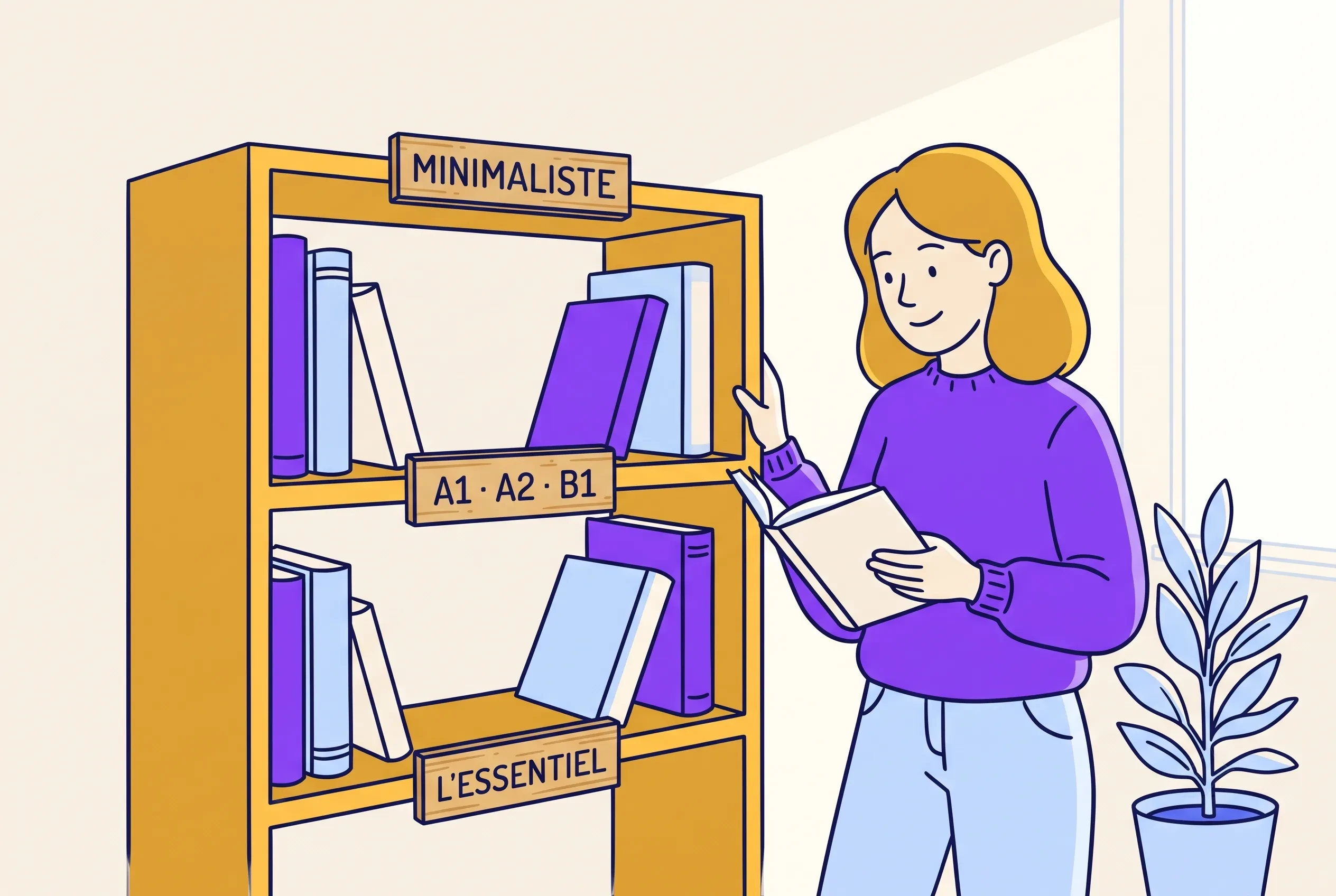
You do not need a large collection to build a useful study routine. Choose resources for different jobs—structured lessons, reading and reference—and make sure each book has a place in your weekly practice.
The textbook hoarding problem, and why it quietly destroys progress
French book hoarding looks respectable from the outside. The learner seems committed. They own a method book, a grammar drill book, a pronunciation guide, some readers, maybe a verb handbook, maybe a DELF prep title they are nowhere near ready for. It all looks serious. The hidden problem is that seriousness of purchase is not seriousness of use.
What actually happens: the learner starts a book, gets enough friction to feel uncertain, then switches resources instead of staying long enough for the first one to become useful. They do not need another explanation. They need more contact with the same explanation until it stops feeling foreign. The same pattern shows up in shy beginners who keep preparing instead of speaking: buying feels productive, but it is actually avoidance in a bookshop costume.
The minimalist rule most people resist first
The average stalled learner does not need better books. They need fewer active books. One core method used thoroughly beats three methods sampled nervously. Every time.
Why fewer books work better
French is cumulative. The pronouns chapter lands because the chapters before it already installed the verbs, the word order, the shapes you now half recognise. Switch books at chapter nine and you re-enter the same house through a different door, on the ground floor again. The honest objection is that the book stopped working. It almost never has; what stopped was the feeling of progress, which runs on its own clock. Seeing the real hours behind each CEFR level is what keeps a shelf from growing.
The Library is useful here not because it offers “more books” but because it already sorts by level and purpose: Top 3 Picks, Beginner Textbooks, Graded Readers, Pronunciation & Listening Mastery, and DELF Preparation Guides. That structure is better than most people invent on their own. Not sure where you stand? The Level Quiz takes three minutes and prevents you from buying books above or below your actual level.
Nine reference sheets, not nine more books
You just saw the case for a small shelf: one core method used fully beats a stack you only dip into. A few quick reference sheets cover the rest, so the things textbooks bury (verb tables, gender and agreement, passé composé versus imparfait, tu versus vous) stay one page away instead of one more purchase. Enter your email and the free cheat sheet pack (all nine) downloads right away.
How many French books you actually need at A1
A1 minimalist target: 1 or 2 books
One structured beginner path, plus optional very controlled reading once the floor exists. That is it.
A1 is where learners buy too much because they feel the least stable. The irony is that A1 is exactly where you need the least variety. At this stage, one structured course is doing almost all the real work. Your job is not to optimize the method. Your job is to survive the first coherent block of French.
What your main A1 book must do
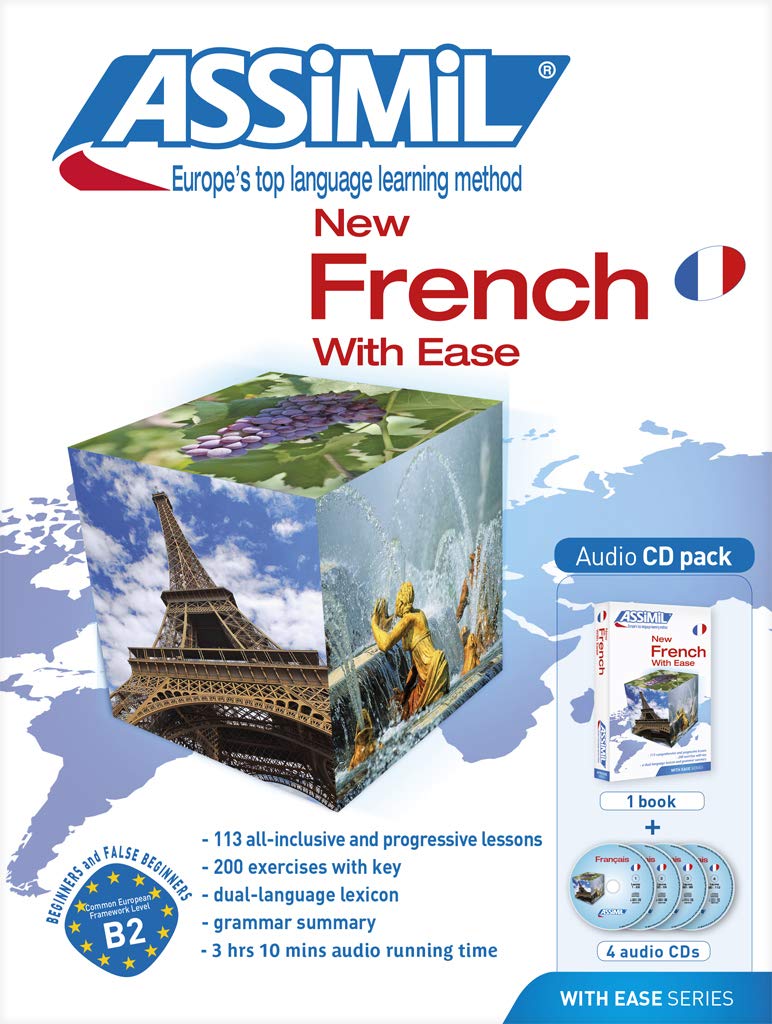
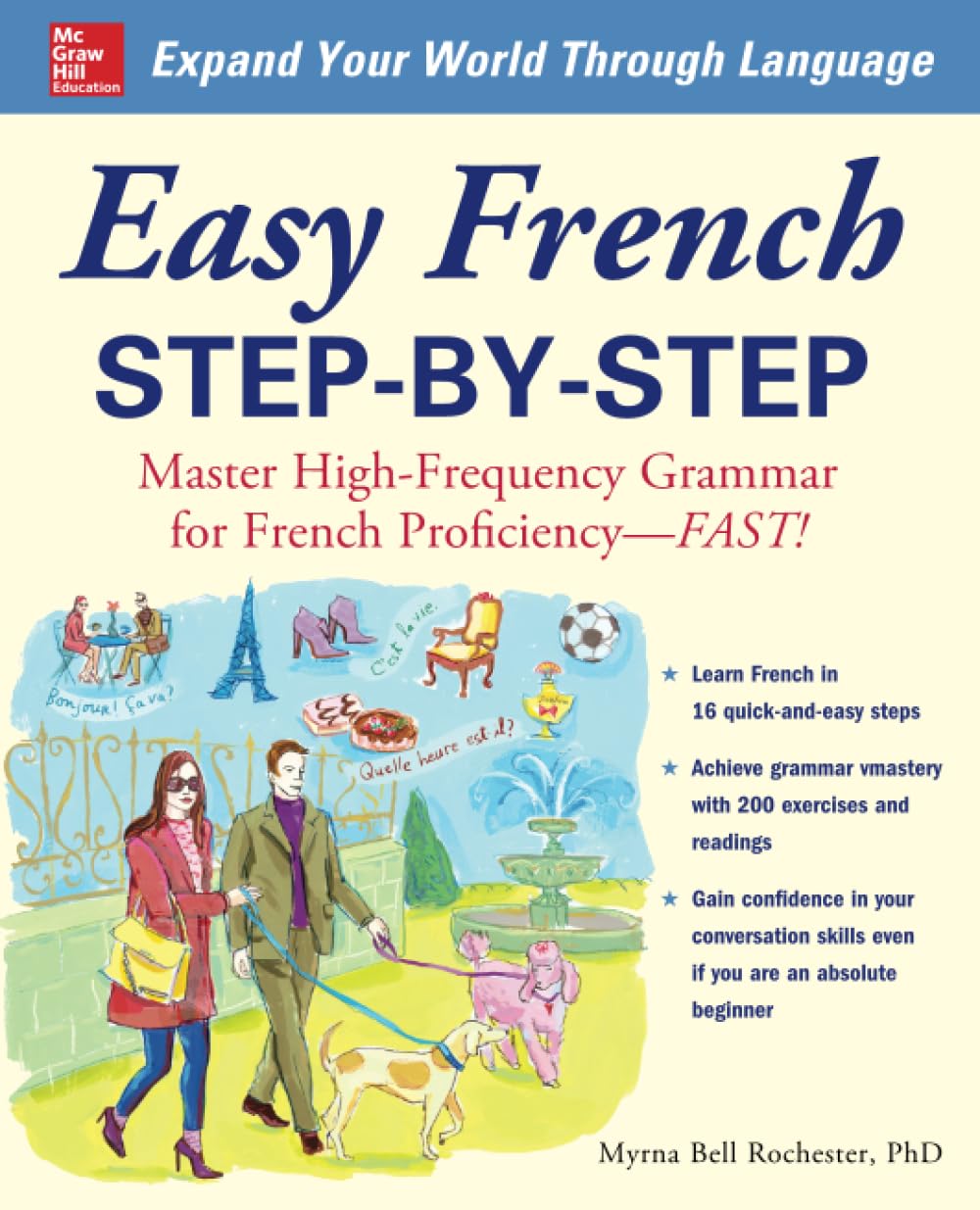
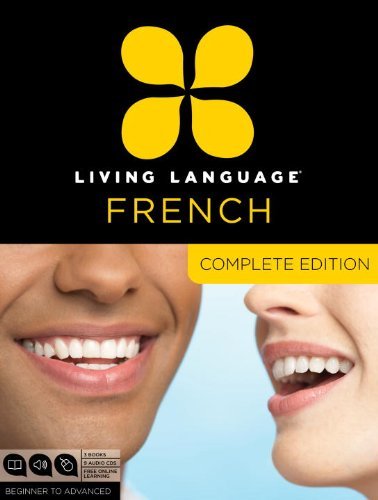
Give you basic present tense structure, core vocabulary, sentence formation, articles, gender exposure, and enough repetition that you stop feeling like every sentence is a brand-new event. That is the whole brief. Inside the Library, the beginner section already narrows the field to proven options like Assimil: New French With Ease (intuitive, audio-heavy, long runway) and Easy French Step-by-Step (explicit, structured, reassuring for nervous beginners).
The optional second book at A1
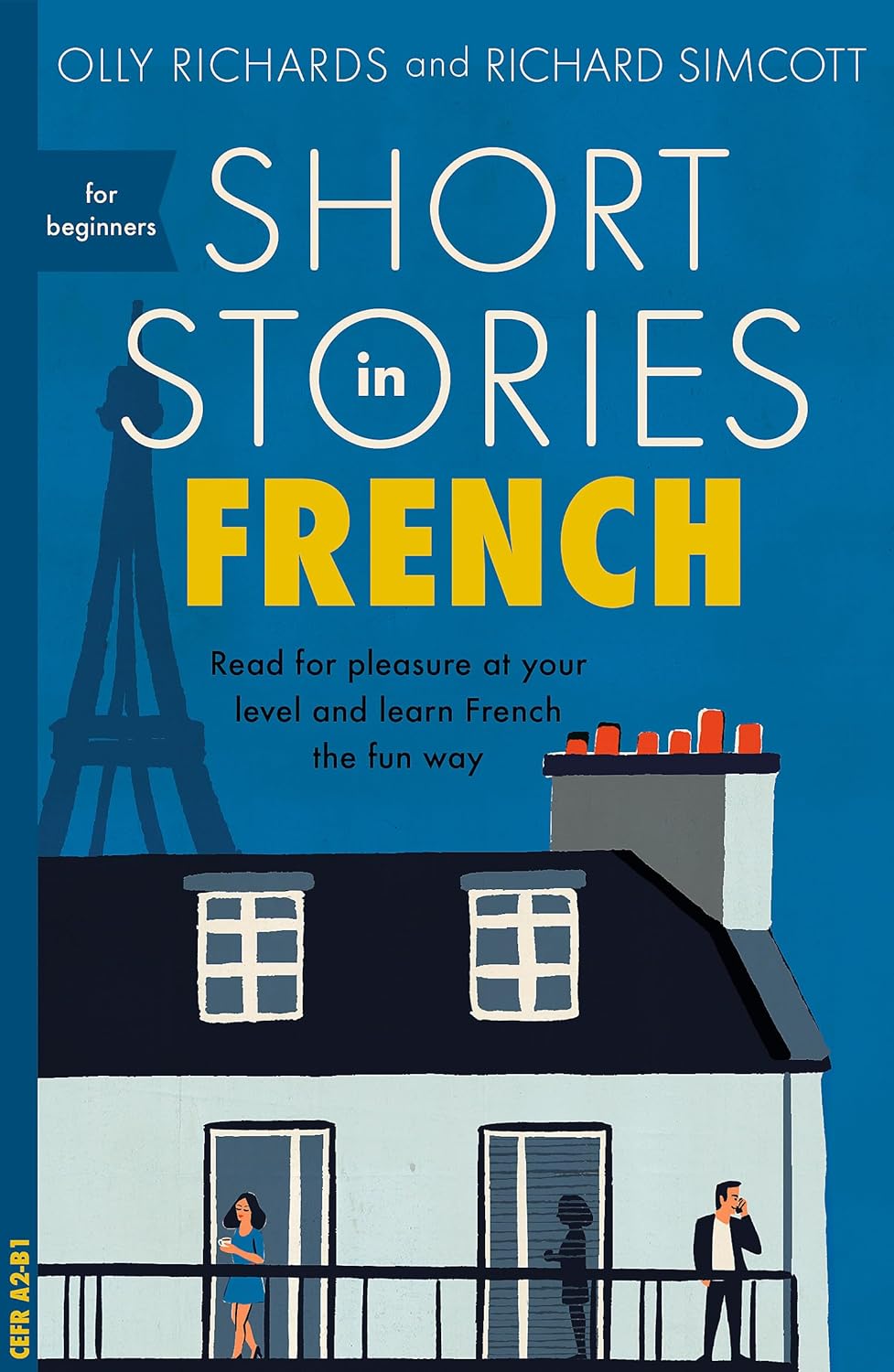
If you are actually moving through the main book, one reading supplement can help. Not because beginners need “more content” but because they need a second mode of contact with the same language. A title like Short Stories in French only becomes useful if the main textbook has already done structural work first. If pronunciation is the real bottleneck, the pronunciation and listening guide is more useful than buying another general textbook.
Best A1 formula. One main structured book. Then, only once the foundations hold, one controlled reading stream from the Library. Do not build a shelf. Build a habit.
📚 From the Library — A1 picks
How many French books you actually need at A2
A2 minimalist target: 2 or 3 books
Continue your core method, add one stable reference if needed, and increase reading volume. Reading starts doing part of the teaching at this level.
A2 is where learners become impatient with textbooks without being strong enough to leave them fully behind. If you react by buying multiple “intermediate” books, you usually end up duplicating explanations instead of building range. The Library‘s Graded Readers section makes more sense at A2 than at raw beginner level because the learner can now benefit from repeated contextual exposure.
For reference, Collins Easy Learning 3-in-1 works as a compact lookup tool: grammar, verbs, and vocabulary in one volume. Not glamorous. Often useful precisely because of that.
Where the Learning Center starts mattering more than another book
At A2, many learners do not need a new course. They need better sorting around the course they already have. Instead of buying a new book each time a friction point appears, route the friction to the right article. The Learning Center is organized exactly for this: common mistakes when one error keeps recurring, false friends when English interference is the issue, passé composé vs imparfait when tenses collapse, café culture or bakery vocabulary when you need real-life phrases that textbooks flatten.
A2 overbuying trap. If your first instinct at A2 is “I need more textbooks,” pause. You probably need more reading and better topic-specific clarification, not more method books.
How many French books you actually need at B1
B1 minimalist target: 3 or 4 books
Keep one reference, maybe one structured path, then move increasingly toward real reading and level-appropriate specialization.
B1 is the hinge level. Up to now, books mainly teach. At B1, books increasingly expose. Choosing books by label starts mattering less than choosing them by function: exposure, consolidation, reference, or exam preparation.
Your first serious reading expansion
This is the stage where the Library stops being a supplement and starts becoming central. Graded Readers still matter, but now more advanced options start becoming realistic: Short Stories Intermediate, Penguin Readers: Les Misérables, and parallel-text options. For cultural reading that complements books, the media guides work as a different input channel: podcasts on Spotify, French shows on Netflix, French music ranked by level, and French BD (comics) all extend reading into listening and visual input.
📖 From the Library — Readers & B1 tools
When specialized books finally make sense
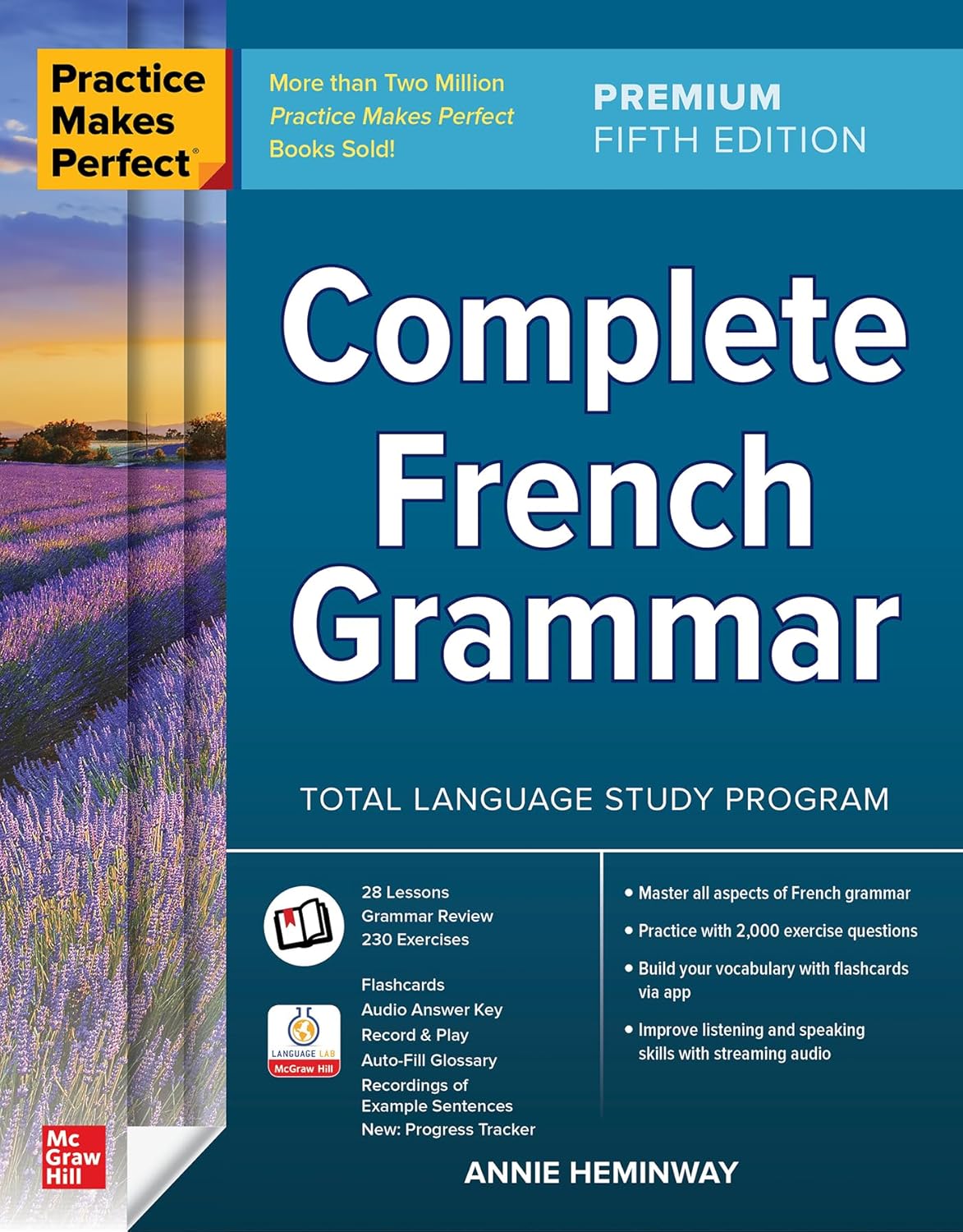
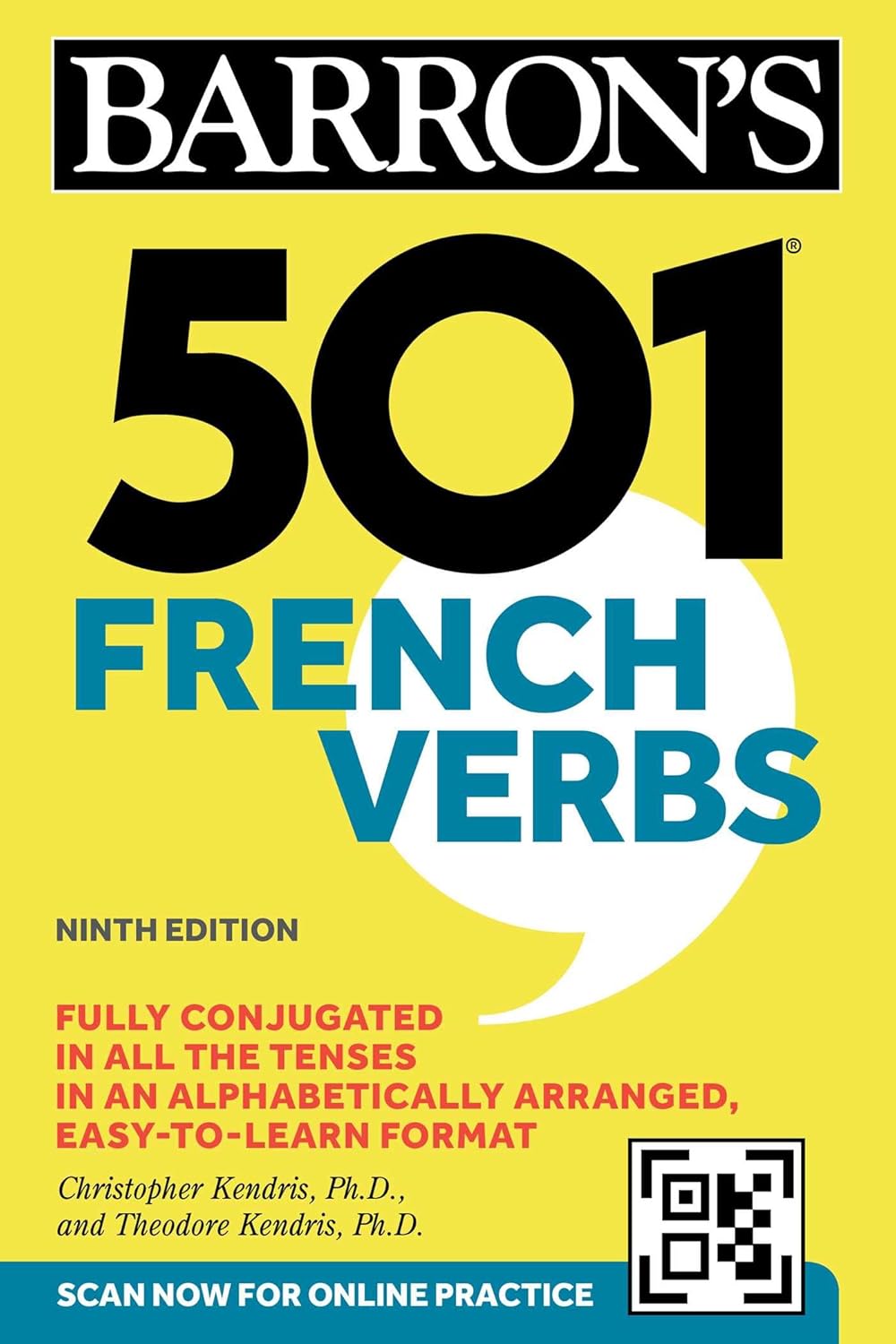
B1 is the first point where the Library‘s specialized sections become more than aspirational. The DELF A2 and B1 Preparation Guides start mattering if exam format is becoming real. The TCF vs DELF comparison should come before any exam book purchase because buying the wrong prep guide wastes both money and time. Books like Complete French Grammar and 501 French Verbs finally have a proper use-case here, but only if your goals justify them.
If B1 points at moving rather than at an exam, the shelf changes shape. Naturalisation asks B2 as of January 2026, the carte de séjour pluriannuelle asks A2, and the relocation walkthrough tells you which number applies to you before you buy any prep book. A level is not a job, though. Neither of these is in any textbook: the questions a French recruiter actually asks, and the office register, from morning greeting to email sign-off.
What books will not teach you
Books build structure, vocabulary density, reading stamina, and reference stability. They do not automatically give you listening tolerance, social intuition, or contextual judgment. That is why relying on books alone eventually creates a strange kind of half-competence: the learner knows a lot but still freezes when French speeds up or shifts register.
The think in French guide addresses this directly: the habit of translating everything through English persists even with strong book knowledge because books train the eye, not always the internal monologue. The 15-minute daily routine shows how to combine book study with output practice in a schedule that actually fits adult life. And when the problem is not knowledge but courage, the shy beginners guide exists for exactly that gap between knowing and doing.
The one that’s practice, not theory
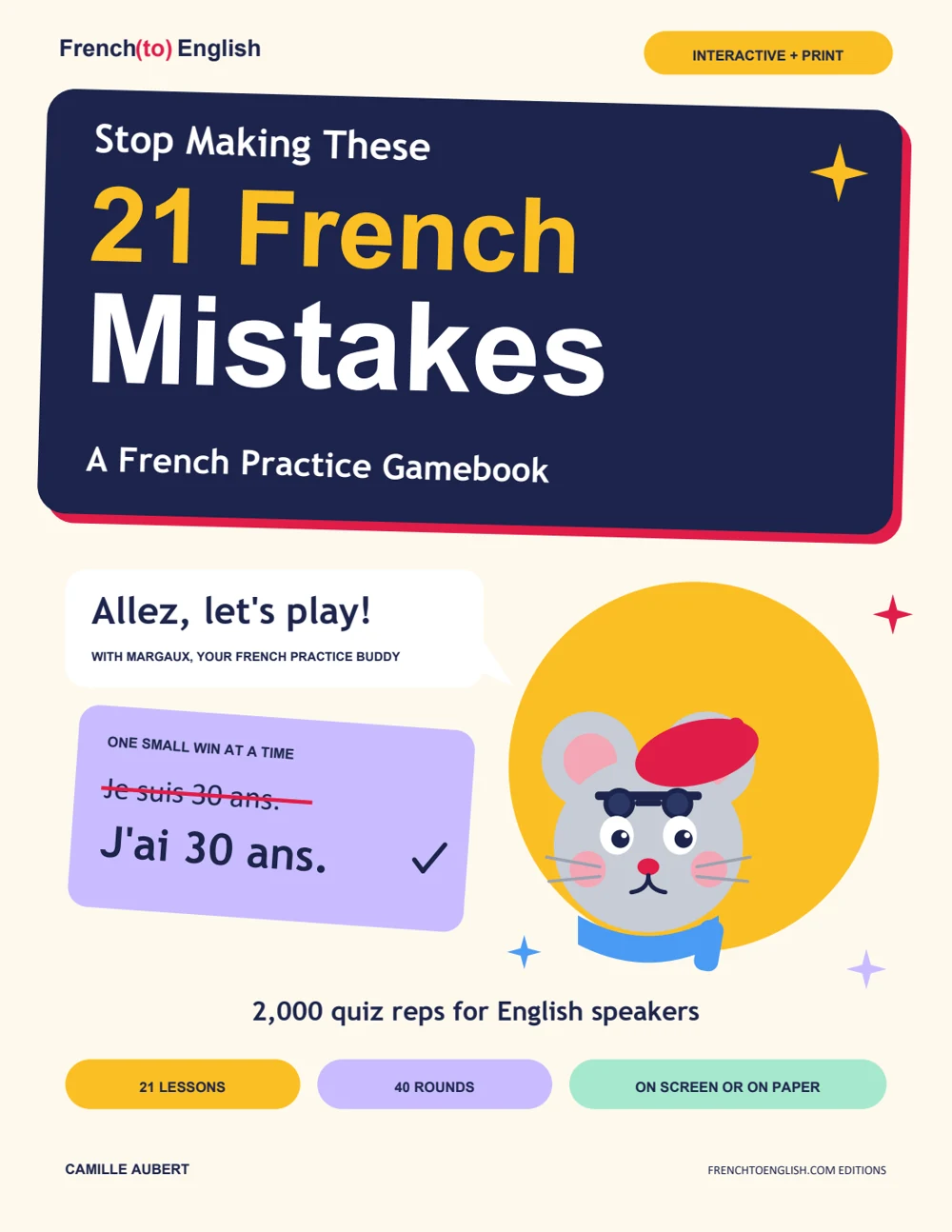
Textbooks teach. They rarely make you use French. Our French Gamebook does the opposite: 40 themed rounds that drill the exact 21 mistakes English speakers keep making, by playing rather than memorising. 300 pages in one interactive PDF. Play on your computer or print a round. Yours to keep.
The minimalist French book setup from A1 to B1
| Level | Books | What they do | What fills the gaps |
|---|---|---|---|
| A1 | 1-2 | One structured path + optional light reader | Briefing for daily contact, Quiz to verify level |
| A2 | 2-3 | Keep path, add reference, start reading via Library | Learning Center for specific friction points |
| B1 | 3-4 | Reference + readers + optional exam prep | Media input: podcasts, Netflix, music |
The real diagnostic question. If you own many French books but cannot name the role of each one, you do not have a study system. You have a pile. One core book. One reference if needed. Reading routed through the Library. Topic-specific support routed through the Learning Center. That is enough.
If you own many French books but cannot name the role of each one, you do not have a study system. You have a pile. One core book, used to the last chapter. One reference, opened when something breaks. Everything else is a purchase you made to feel like you were studying.
Study glossary: book and learning vocabulary
| 🇫🇷 French | 🇺🇸 English | 💡 Context |
|---|---|---|
| Un manuel / un livre | A textbook / a book | Le manuel est votre outil principal |
| Un cahier d’exercices | A workbook | Complément, pas remplacement |
| La grammaire / le vocabulaire | Grammar / vocabulary | Les deux piliers de tout niveau |
| Un niveau (A1, A2, B1) | A level | Vérifiez avec le Quiz avant d’acheter |
| Débutant / intermédiaire | Beginner / intermediate | Labels sur les livres, pas toujours fiables |
| Apprendre / étudier / réviser | To learn / to study / to review | Trois actions différentes |
| Comprendre / mémoriser | To understand / to memorize | Comprendre ≠ retenir |
Prefer to keep it free today? Read the French Briefing →
The French Gamebook
Give your study routine something to practise.
For English speakers practising French
Pick a lesson, play a round and note the mistakes you want to revisit. The Gamebook gives your next session a concrete task and answers to check.
- 21 lessons with explanations
- 40 practice rounds · 2,000 questions
300 pages · Play on your computer or print
Get the Gamebook · $9 Read a preview before you buyOne payment · Instant PDF download
Try the French with someone who can reply.
Bring a sentence you found difficult. Ask a tutor to help you say it naturally, then try it in a short conversation.
Find a French tutor →Paid lessons. Compare tutors and prices before booking.
Affiliate link: we may earn a commission when you book.
📚 Keep building in the Learning Center
French Learning Games for Adults: Pick a Format That Fits Your Life
French games for adults work best when the task feels useful and everyone can participate. Plan cooperative or…
Read →Learn French with a Game: Turn One Round into a Useful Study Session
To learn French with a game, choose one small language goal and make the rules serve it. Build…
Read →French Learning Games: Choose the Practice You Actually Need
French learning games are useful when their rules make you practise the skill you want to improve. Compare…
Read →