
Practice French Reading With Real News, Not Textbooks
French reading practice usually means invented dialogues about Monsieur Dupont buying bread. Ours means France: real news stories, rewritten at your level, updated daily. Pick your level below and start reading.
Why real news beats textbook French
Textbook reading passages are written backwards. Someone lists the grammar of chapter 6, then invents a story to contain it. The result reads like nothing a French person has ever written, because it is. Apps share the blind spot: our Babbel vs Duolingo comparison lands on exactly this, neither app teaches you to read the real thing.
Real news is written forward: something happened in France, and the text exists to tell you. That single difference changes everything about the practice. The vocabulary is the vocabulary of French life this year. The references are the ones your future French conversations will assume. And you read to find out what happened, which is the only reading motivation that survives past week three.
The catch, and it’s a real one: authentic French news is C1-level by default. Le Monde doesn’t care that you started in March. So most learners bounce between two bad options, fake easy texts or real impossible ones.
Our answer is the French Briefing: one real news story every day, rewritten at three difficulty levels, A1-A2, B1-B2 and C1-C2, with the cultural context explained in English. Same France, three French. Every excerpt below comes from a real Briefing story published this month. This is a reading page, so let’s read.
A1: Beginner French reading
At A1 you need short sentences, present tense, concrete facts. You don’t need baby content. Here’s the 2026 Tour de France, A1 version, from our Tour de France explainer:
Every sentence under twelve words of payload. Real facts, real France, zero Monsieur Dupont. Read it twice: once for meaning, once out loud.
More at this level: every story tagged A1 in the Briefing archive.
A2: Elementary French reading
A2 adds past tenses and the first taste of French institutional life. France’s summer sales are set by government decree, and yes, that’s a real sentence about a real country. From our soldes 2026 story:
Notice what the fragments do. French news style loves the verbless sentence, and textbooks never show it. Ten of these and you stop translating word by word, because there’s no word order to lean on. There’s only meaning.
More at this level: the A2 story archive, and our guide to French news phrases for decoding headlines.
B1: Intermediate French reading
B1 is where subordinate clauses arrive and where most learners stall, because course material stops here. The fix is volume of exactly this kind of prose. The Tour again, B1-B2 version this time:
Same story as the A1 excerpt above. Compare them. That jump, from facts to paradox, from courte phrase to clause chain, is the actual distance between A1 and B1. Seeing the same story at two levels shows you precisely what your next level asks of you. No textbook can, because no textbook writes every text three times.
The two-level trick
Read the story at your level, then reread it one level up. You already know what it says, so your brain can spend everything on how French says it. Our readers call this the fastest plateau-breaker we teach.
B1 is also where expressions start paying rent. From the same Tour story:
A sports story just taught you a business expression. That’s the compounding interest of real content: every text pays in more than one currency.
More at this level: the B1 archive, plus French news sources ranked by difficulty when you want to test the open water.
B2: Upper-intermediate French reading
At B2 you stop reading about France and start reading France: irony, institutions, numbers with agendas. The soldes story again, upper level, heatwave edition:
«Le ciel s’en est mêlé» is the kind of French no course teaches and every French columnist uses weekly. Personification, understatement, a record slipped in like a shrug. At B2 your job is collecting these moves until they stop surprising you.
More at this level: the B2 archive, and the radio debates guide to attach your reading to your listening.
Beyond the news: what else to read at each level
News is the spine of the practice because it renews itself daily and carries current France. It’s not the whole diet.
At A1-A2, add bande dessinée: pictures carry the plot while the French catches up, and the dialogue is real spoken French in print. Our BD guide for learners ranks the classics by difficulty. At B1, graded readers and your first short novel; you need fewer books than you think, and we counted exactly how few. At B2, subscribe to something French you would read in English anyway, and keep a serious dictionary within reach; the dictionary guide sorts the good ones from Word Reference’s imitators.
How to turn reading into real progress
Reading practice fails one way: passively. Eyes move, nothing sticks. The difference between reading and progress is a loop, and it takes ten minutes a day.
- 1Know your level. Guessing wastes months. The free 20-question test places you on the CEFR scale in five minutes.
- 2One story a day, at level. First pass for meaning, second pass for language. Glossary after, never during the first read.
- 3Reread one level up. The two-level trick above. Two extra minutes, disproportionate payoff.
- 4Close the loop. Each Briefing story ends with a comprehension quiz. Score it. What gets measured gets remembered.
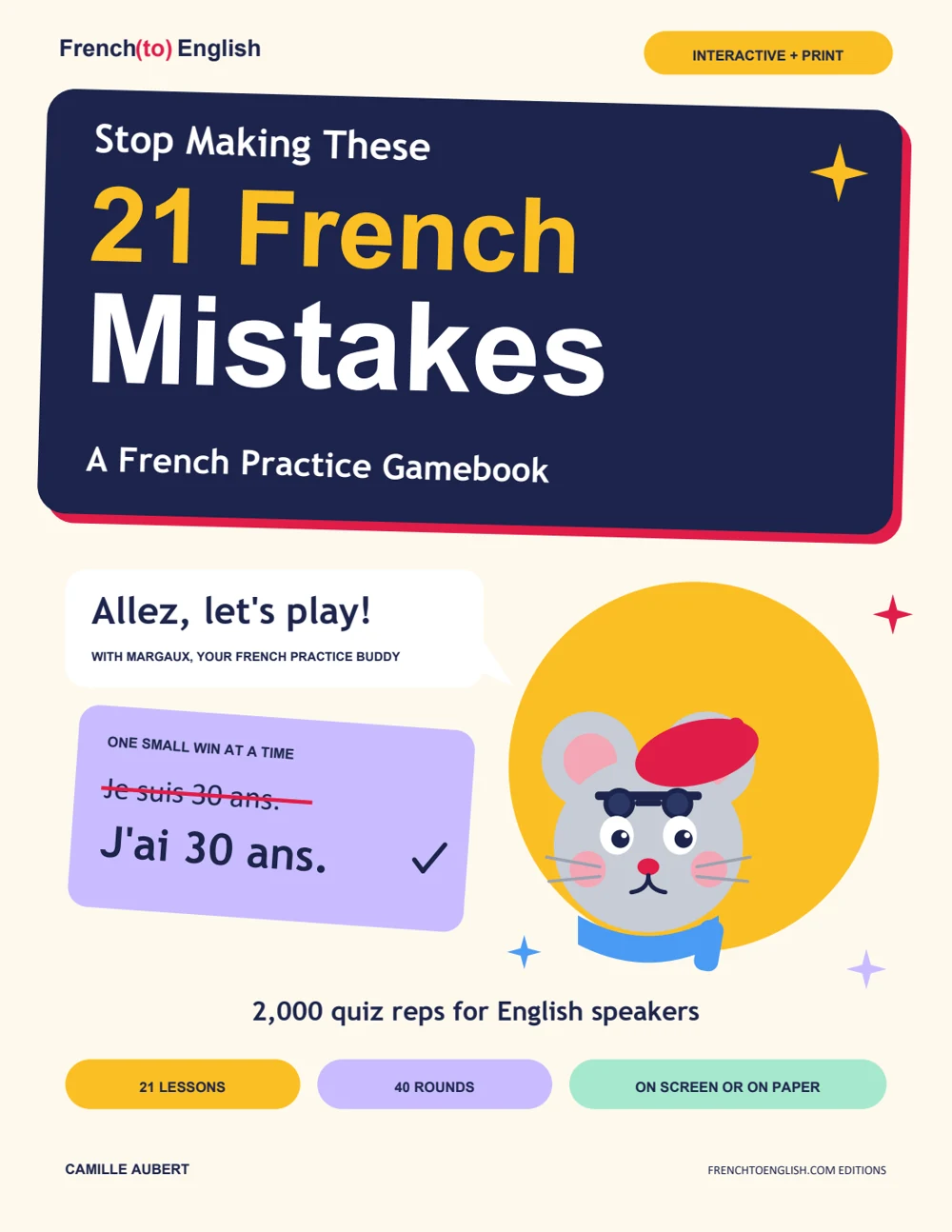
Read, hear, speak, measure, the same France every day: that loop is what we mean by immersion, and six months of it beats any single course we know. We compared them all in our guide to French courses in 2026. If your mistakes survive the immersion habit, they are the stubborn kind; that’s a different problem with a different fix, and it’s the one our French Gamebook was built for.
Quick answers
What is the best French reading practice for beginners?
Short, real, leveled texts read daily. Start with A1 news stories: real content in controlled French. Avoid authentic newspapers at first; bouncing off C1 prose teaches nothing but discouragement.
How do I practice French reading comprehension?
Two passes per text, glossary on the second pass only, then a comprehension check. Reread the same text one level higher to feel the mechanics. Daily volume at the right level beats occasional heroics with a dictionary.
Is reading French news too hard for learners?
Raw French news is C1 by default, so yes. Leveled news is the workaround: the Briefing rewrites each story at three levels, A1 to C2, so the same day’s France is readable at every stage.
How much should I read per day?
One story, ten minutes, every day. Consistency compounds; volume without consistency does not. After a month, add a second story or move one level up.
Choose your next step
What do you want to work on?
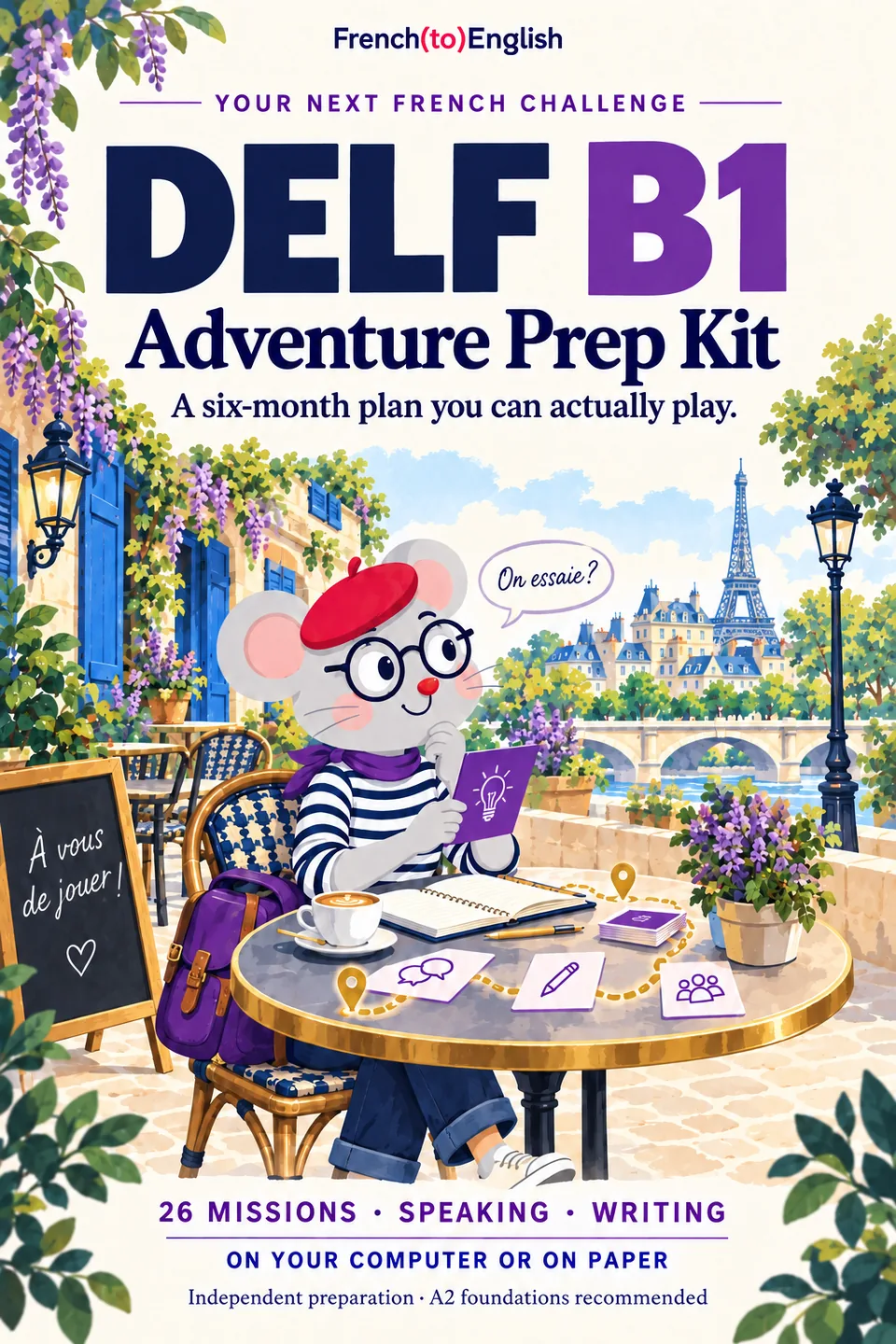
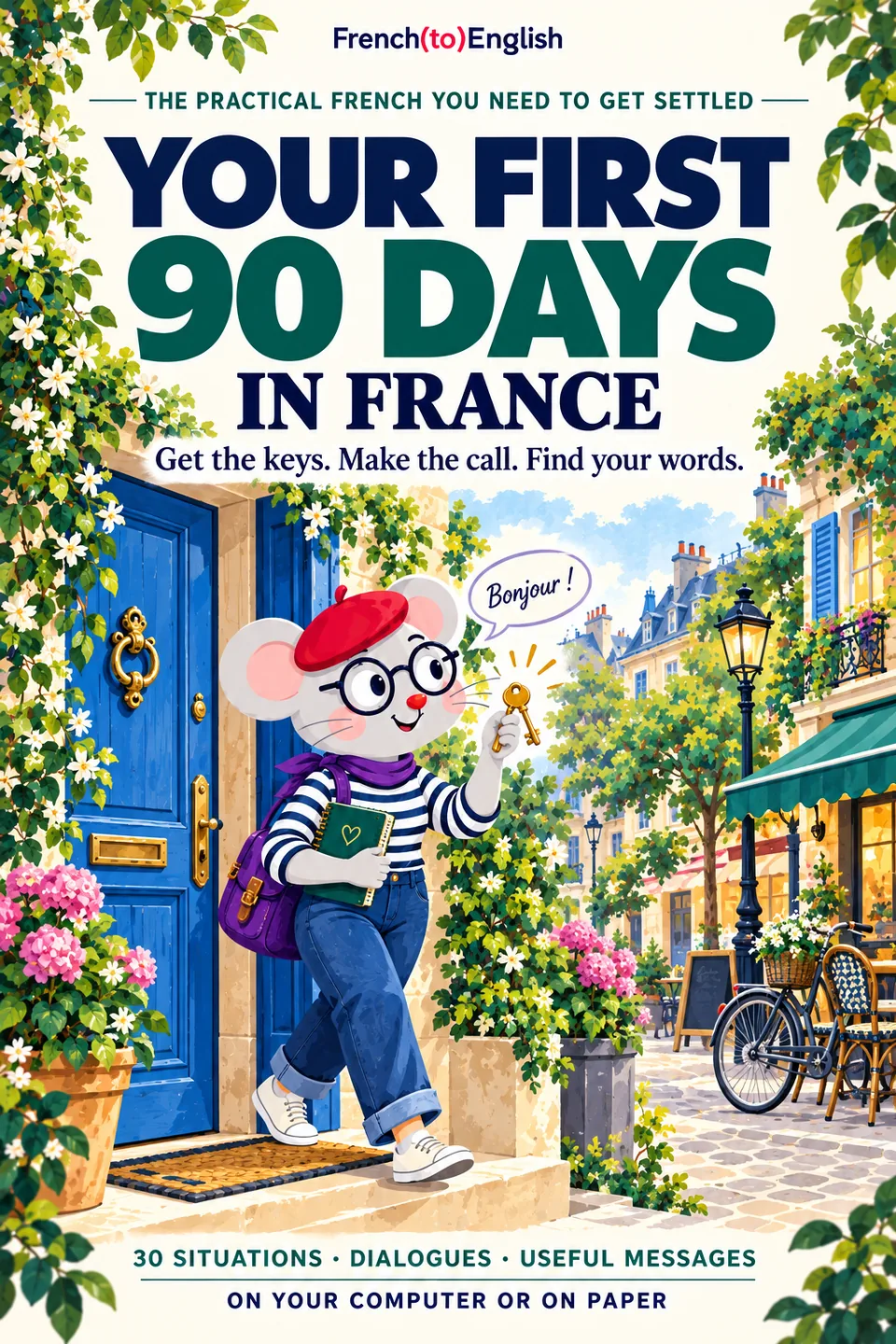
Practise French, prepare for B1 or plan your move. Choose the guide that fits your next step. Each is sold separately.

Use your French in a real conversation.
Bring a question from a guide to a French tutor. Try it aloud, ask for feedback and leave with something to practise.
Find a French tutor →Paid lessons. Compare tutors and prices before booking.
Affiliate link: we may earn a commission when you book.
📚 Keep building in the Learning Center
DELF B1 Sample Papers: Where to Start and How to Use Each Attempt
DELF B1 sample papers help you understand task instructions and practise under stated conditions. Use official examples, keep…
Read →DELF B1 Practice Test: Find the Next Task Behind the Score
A DELF B1 practice test is most useful when you know what it measures and how to review…
Read →Your First Week in France: Five Conversations Worth Preparing
Your first week in France is easier to organise when you prepare for a few immediate situations. Plan…
Read →