Babbel vs Duolingo: The Honest Comparison for French Learners
Babbel vs Duolingo is the wrong question, and we’ll answer it anyway. One teaches French better. One is free. Neither gets you to real French on its own. Here’s the full breakdown.
Quick verdict
You want the answer before the analysis. Fair.
| Babbel | Duolingo | |
|---|---|---|
| Best for | Adults who want French explained, not gamified | Building a daily habit at zero cost |
| Teaching style | Explicit grammar, realistic dialogues, 10-15 min lessons | Gamified drills, implicit grammar, streaks and leagues |
| Free version | First lesson of each course only | Full course, with ads and life limits |
| Price paid | $7.99 to $19.99/mo depending on commitment | Super: about $12.99/mo, or $95.99/yr |
| Ceiling | Solid A2-B1 foundations | A2-ish, slowly |
| Shared weakness | Neither teaches you to read real French: the news, the culture, the France of 2026 | |
If you need one sentence: pay for Babbel if French is a project, keep Duolingo if French is a hobby, and add real French reading either way. That last part is the one nobody tells you. We will. And if you are weighing more than two apps, our 2026 guide to French courses ranks every option, from tutors to news-based immersion.
How we compared them
La Rédaction reads and explains French news for a living. So our test is not “which app feels nicer.” It’s one question: after six months with this app, can you open a French article and survive?
What this comparison is based on: both current French courses, their free tiers, and their official pricing pages, all checked in July 2026. Zero affiliate links on this page, for either app. We sell our own French gamebook and a free news briefing, and we say so openly. That’s the whole disclosure.
Why trust a French news site on this
We’re not neutral reviewers. We’re the destination. Apps are where English speakers start; real French content is where they either arrive or give up. We watch the second half of that journey every day, so we know exactly what the apps leave out.
How Babbel works
Babbel is the serious one. Lessons run 10 to 15 minutes, built around dialogues you might actually have: ordering, introducing yourself, complaining about trains. The vocabulary is chosen for usefulness, not for owls.
Grammar teaching
This is Babbel’s real edge. It stops and explains. Why it’s je suis allé and not j’ai allé. When tu insults someone and when it flatters them. The explanations are short, in English, and placed exactly where you need them.
A typical Babbel dialogue line. Notice the vous: Babbel teaches register early, because adults need it immediately. Duolingo gets there much later.
Speaking and listening
Speech recognition checks your pronunciation, and the dialogues are voiced by humans at a reasonable speed. Babbel Live adds real group classes with teachers on the higher tier, which turns the app into something closer to a school. The base experience is rehearsal, not conversation. Useful rehearsal, but don’t confuse it with talking to a French person who is already annoyed.
One more Babbel habit worth stealing even if you never subscribe: its review manager resurfaces old vocabulary on a spaced schedule. Whatever tool you use, the forgetting curve doesn’t care about your feelings. Something must bring the old words back, on purpose, forever.
Price
Month to month costs $19.99. Commit for six months and it drops to $9.99 per month, or $7.99 per month on the 12-month plan. A lifetime option for all Babbel languages lists between $249 and $299 and goes on sale constantly. There’s a 20-day money-back guarantee.
How Duolingo works
Duolingo is the habit machine. Streaks, leagues, a passive-aggressive owl. It made language learning a daily reflex for half a billion people, and that achievement is real. So is the ceiling.
The free version and gamification
The entire French course is free. You pay with ads, limited mistakes, and the constant tug of mechanics designed to keep you tapping. The gamification works. The question is what it makes you practice: recognizing French, mostly. Producing it, less. Reading a real paragraph, almost never.
Here’s the contradiction, and it resolves quickly: Duolingo is both the best thing that happened to language learning motivation and a poor teacher of French. Both are true. A streak is a habit, and habits are half the battle. The other half is content the streak never shows you.
AI features
In January 2026, Duolingo moved its AI Video Call and Explain My Answer features into the free tier. That changed the math: the AI conversation practice that justified the expensive Max plan is now available to everyone, and Max keeps mostly scripted roleplays and deeper feedback. Good news for free users, awkward news for Max subscribers.
Price
Free with ads. Super Duolingo removes ads and life limits for about $12.99 per month, or $95.99 per year. A family plan covers up to six people for $119.99 per year. Duolingo Max runs about $29.99 per month or $168 per year, and after the January 2026 change it’s hard to recommend for French.
Cost comparison
| Plan | Babbel | Duolingo |
|---|---|---|
| Free | First lesson per course | Full course, ads + limits |
| Monthly | $19.99 | Super: ~$12.99 |
| Annual | $95.88 ($7.99/mo) | $95.99 |
| Family | None | $119.99/yr, 6 users |
| Lifetime | $249-$299 list, frequent sales | None |
| Premium AI tier | None | Max: ~$29.99/mo or $168/yr |
Read that annual row again. $95.88 versus $95.99. Eleven cents apart. We checked twice. At identical prices, the comparison stops being about money and becomes purely about teaching. That’s a comparison Babbel wins.
What neither app teaches you
Finish Babbel’s French course and Duolingo’s tree back to back. Then open a French newspaper. You’ll recognize maybe half of it.
Not because the apps failed at their job. Because their job was vocabulary and grammar in laboratory conditions. Real French arrives dirty: politics you have no context for, cultural references from 1998, irony, administrative vocabulary no app dares teach. Context beats grammar. Every time.
One sentence from a real 2026 French news story. Every word is A2-level. The sentence is not, because you need to know that French sales dates are set by the State. No app teaches that. Reading France daily does.
That gap has a name: immersion. Not the brochure kind, the daily kind, real French reaching your eyes, your ears and your mouth. The Briefing gives you a place to start.
The French Briefing takes one real French news story every day and rewrites it at three levels, A1 to C2, with the cultural context spelled out. Structured practice on the reading itself starts on our reading practice page, sorted by level.
Verdict by profile
Complete beginner
Babbel, if you can spend $7.99 a month. The early explanations save you months of confusion about gender, register, and past tenses. Add five minutes of A1 reading per day from real France, and you’re ahead of 90% of app users. Unsure where you actually stand? Take our free 20-question level test first.
Budget at zero
Duolingo free, used with discipline: do the lesson, skip the leagues, and spend the saved money on nothing. Then compensate for the content gap with free real French: the daily Briefing costs exactly what Duolingo costs. Our guide to learning French as an English speaker shows how to structure it.
You want real fluency
Then the app is your warm-up, not your training, and the training is immersion: daily real input plus real production. Keep whichever app you enjoy, cap it at 15 minutes, and put your real effort into immersion: the day’s real story read, heard, spoken and tracked. Our readers who make it to B2 all describe the same turn: the day French stopped being an app and became a daily piece of France. What did the ones who quit have in common? They never made that turn.
Can you just use both?
Yes, and the combination is more coherent than either alone: Duolingo free as the morning reflex, Babbel as the actual lesson. Total cost, $7.99 a month on Babbel’s annual plan. The trap is letting the two apps become the whole diet and mistaking two streaks for progress. Cap the combined app time at 30 minutes and spend minute 31 on real French.
What does 30 minutes of apps plus 10 minutes of real reading look like after six months? That’s the routine question, and we wrote the answer up as a daily routine for busy professionals.
Which app for which goal
Moving to France
Babbel, because register and politeness arrive early, and you’ll need vous at the préfecture long before you need the subjunctive. Pair it with our moving to France guide; the apps are silent on everything it covers.
A DELF or TCF exam
Neither app prepares you for the exam format, the timing, or the written production. Use the app for vocabulary upkeep and train on the exam itself: start with TCF vs DELF to pick your exam, then the level-specific prep guides.
Travel in three months
Duolingo free is enough, honestly. Tourist French is a hundred phrases and the courage to use them. Put the Babbel budget toward one italki lesson the week before you fly, and read a few A1 stories so French signage stops being decoration.
Understanding French media
This is the goal both apps quietly fail. App French and broadcast French are different dialects: one has hearts and streaks, the other has irony, speed, and a 49.3. If the goal is understanding France, reading France is the training. Start at your level on the reading practice page and climb.
The questions everyone asks us
Is Duolingo or Babbel better for French?
Babbel teaches French better: explicit grammar, adult dialogues, register from day one. Duolingo is better at being free and at building a daily habit. At their nearly identical annual prices, Babbel wins on teaching substance.
Can you actually become fluent with Babbel or Duolingo?
No. Either can carry you to roughly A2-B1 recognition. Fluency requires massive real input and real production, which means reading and hearing actual French daily. Apps are the on-ramp, not the highway.
What do people on Reddit say about Babbel vs Duolingo?
The recurring Reddit verdict matches ours: Duolingo for habit and price, Babbel for actually understanding what you’re saying, and a general warning that neither replaces real content. The complaint you see most is finishing a tree and understanding nothing in the wild.
How much does each app cost in 2026?
Babbel: $19.99 monthly, $7.99/mo on the annual plan, lifetime deals between $170 and $299. Duolingo: free, Super at about $12.99/mo or $95.99/yr, Max at about $29.99/mo. Verified on the official pricing pages, July 2026.
Choose your next step
What do you want to work on?
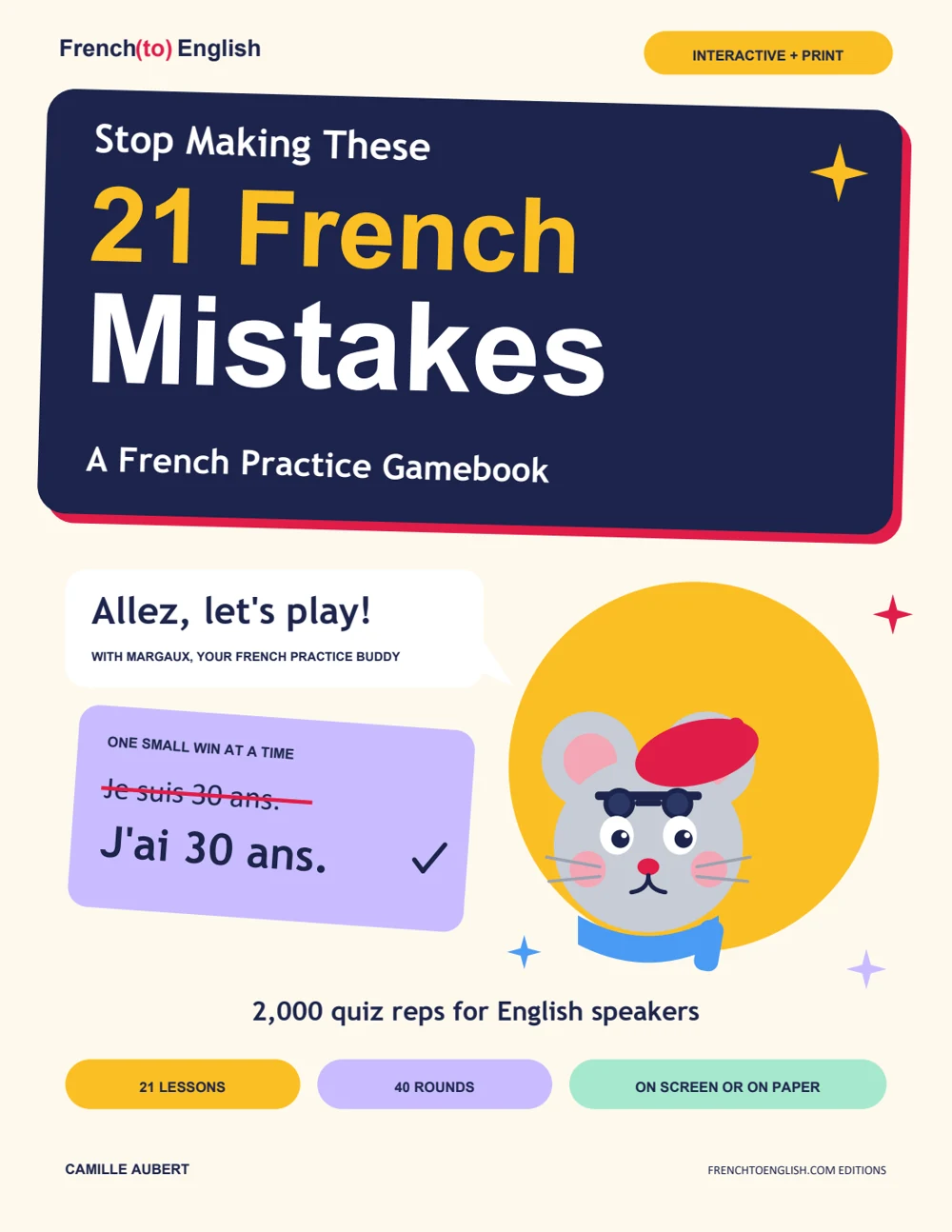
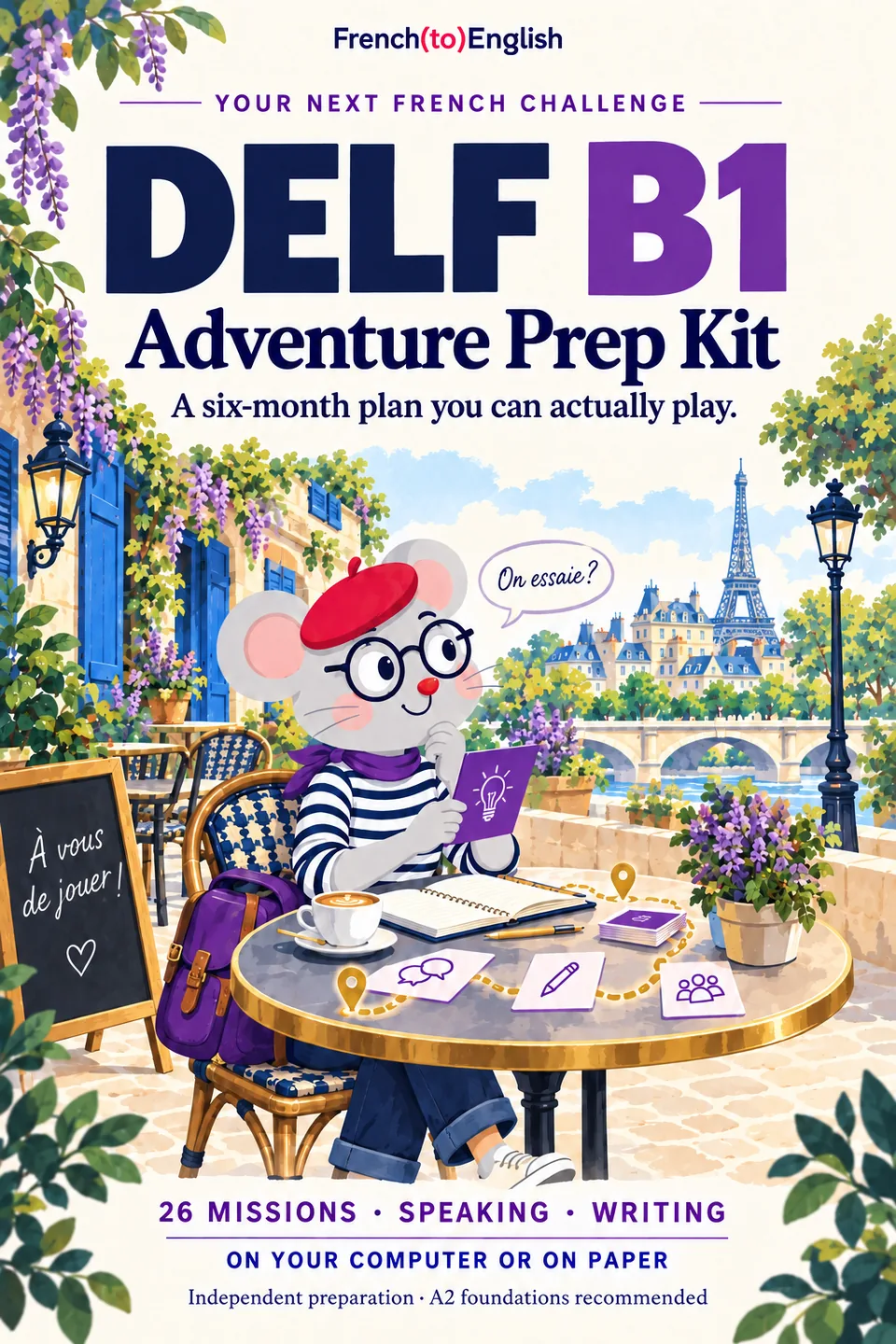
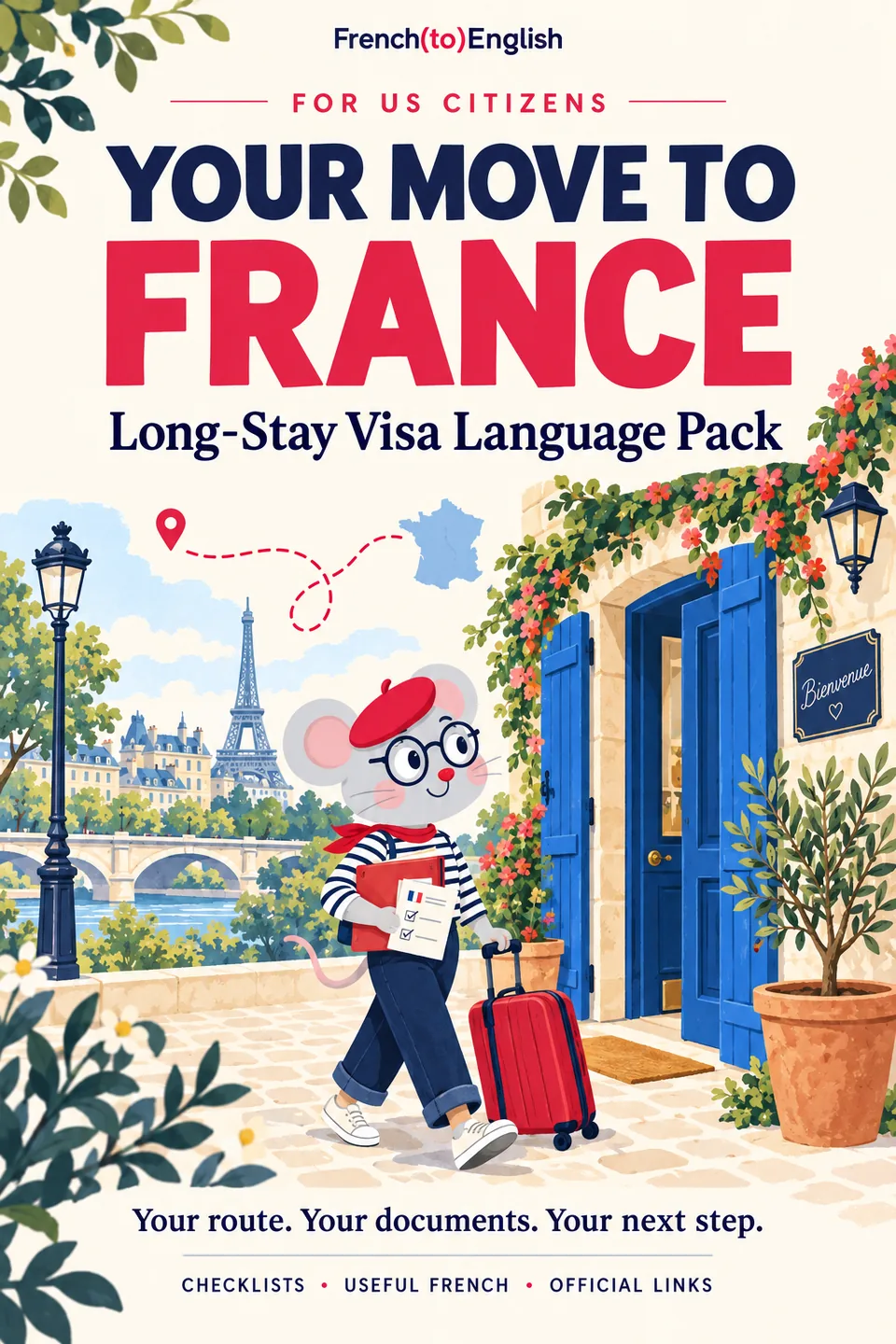
Practise French, prepare for B1 or plan your move. Choose the guide that fits your next step. Each is sold separately.
Use your French in a real conversation.
Bring a question from a guide to a French tutor. Try it aloud, ask for feedback and leave with something to practise.
Find a French tutor →Paid lessons. Compare tutors and prices before booking.
Affiliate link: we may earn a commission when you book.
📚 Keep building in the Learning Center
DELF B1 Sample Papers: Where to Start and How to Use Each Attempt
DELF B1 sample papers help you understand task instructions and practise under stated conditions. Use official examples, keep…
Read →DELF B1 Practice Test: Find the Next Task Behind the Score
A DELF B1 practice test is most useful when you know what it measures and how to review…
Read →French News Vocabulary: Headlines, Quotes and Numbers
Read French news with vocabulary for compressed headlines, dates, numbers and attribution. Compare examples and identify the main…
Read →