French Learning Games: Choose the Practice You Actually Need
French learning games are useful when their rules make you practise the skill you want to improve. Compare recognition, recall and conversation activities, then choose a format, check your answers and turn mistakes into focused practice.
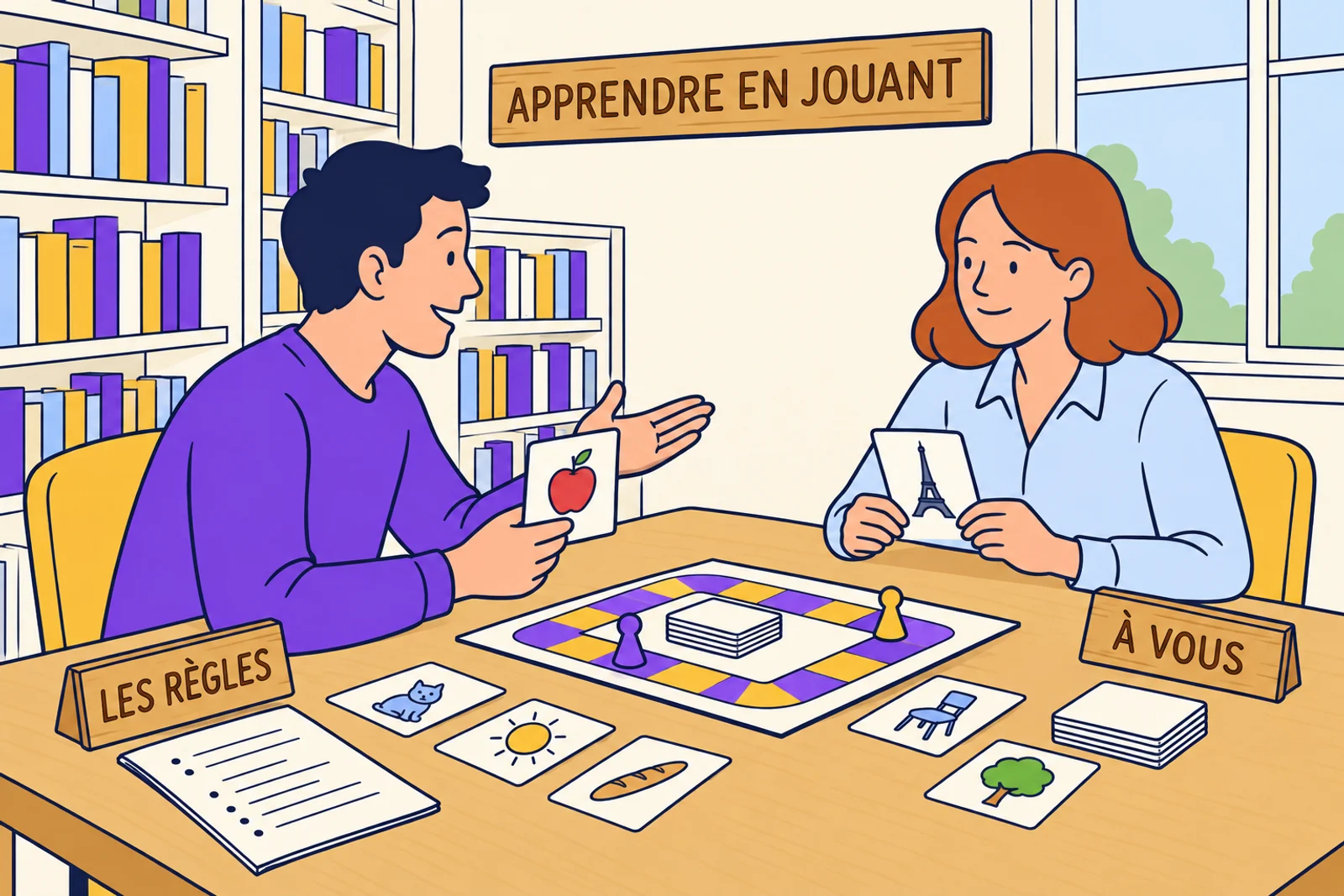
A French game is useful when its decisions resemble something you want to do with the language. Choosing an article, recognising a spoken number and explaining a problem are different tasks. A game can help with one without training the others.
Start by naming the difficulty. Do you recognise words but struggle to retrieve them? Do you know a rule but choose the wrong form in a sentence? Can you read an exchange but lose the detail when you hear it? The answer should guide the format you choose.
This comparison is an editorial framework for evaluating game types, not a controlled test or a ranking based on measured learning outcomes. We publish our own practice materials.
Match the format to the skill
A multiple-choice question can reveal whether you recognise the appropriate form among alternatives. A recall game asks you to produce the word without those alternatives. A role-play asks you to respond to another person's contribution. Each provides different evidence about your French.
| Format | Useful practice | Additional step to add |
|---|---|---|
| Multiple-choice grammar | Distinguishing forms in context | Say a new sentence using the rule |
| Word recall | Retrieving vocabulary | Add an article and a useful phrase |
| Listening choice | Catching a sound or detail | Repeat or paraphrase the message |
| Word puzzle | Spelling and word recognition | Check meaning and usage |
| Role-play | Responding in context | Review the exchange afterwards |
Do not dismiss recognition practice because it is not conversation. Give it the right job. Equally, do not treat a high recognition score as proof that you can use the same language spontaneously.
Recognition games: decide between meaningful alternatives
Recognition practice gives you possible answers and asks you to distinguish them. This can be useful when you repeatedly confuse two forms. A well-constructed item supplies enough context for the intended choice and makes the competing option plausible for a reason you can investigate afterwards.
For an original example, complete “Elle parle français très ___” with bon or bien. The answer is bien because the sentence describes how she speaks. Now compare “C'est un bon livre”, where bon describes the noun livre. The pair gives you something to explain beyond remembering that one button was green.
After a recognition round, hide the options and make a new sentence. This adds a different demand: you now have to retrieve language rather than select it. Keep the two results separate. Choosing correctly and producing correctly are both useful observations, but they are not identical tasks.
Recall games: produce something before you see it
A recall game asks you to retrieve a word, phrase or answer without a visible menu. You might see an English intention, an image or a short definition. Decide in advance what counts as a complete answer. For a noun, that could include its article; for a request, it could include the whole short expression.
Use a small set of checked prompts. If a picture could reasonably represent several words, supply enough context or accept appropriate alternatives. Otherwise, you may end up marking a valid answer wrong because it differs from the word you privately had in mind.
After revealing the answer, explain any difference that matters. A spelling error, a missing article and a different but suitable synonym should not automatically receive the same feedback. The game becomes more useful when it tells you what to practise next rather than simply recording a loss.
Listening games: make the sound carry the decision
A listening game should require you to use the audio to answer. If the visible picture or written sentence already reveals everything, a correct response may not show that you heard the important detail. Look for a task where the reply depends on a sound, word or contrast in the recording.
For a simple original exercise, ask a partner to choose either mardi or jeudi in an appointment sentence. Write the day you heard, then compare. Add the time only after the day contrast is manageable. This lets you identify the difficulty instead of combining several unfamiliar elements at once.
Use slow playback to inspect a phrase when helpful, then try the ordinary-speed version. If the recording remains unclear, check the transcript and seek reliable pronunciation guidance. Repeating an uncertain guess without verification does not make the interpretation more trustworthy.
Role-play games: respond to another person's contribution
Role-play adds turn-taking and a changing situation. One player wants an appointment; the other has a small set of available times. The learner must ask, listen and confirm an option. The objective is not to say every line in a prepared script but to complete the exchange accurately.
Give each player clear information without revealing the other's answer in advance. Use fictional details and a narrow task. If the scenario becomes too open, the language demands may exceed what you wanted to practise. You can add complications once the basic exchange works.
Afterwards, review the outcome and one language point. Did both players agree on the same time? Was a clarification needed? Which phrase would help in another round? This makes the game a source of specific feedback rather than a conversation that ends with an unexplained impression of success or failure.
Word puzzles: enjoy the puzzle and add usage
Crossword-style clues, letter arrangements and word searches can focus attention on spelling and word recognition. Their limitations depend on the task. Finding a word in a grid does not necessarily require knowing its meaning, while explaining a clue may require much more language.
Add a usage step to the format you enjoy. After finding a noun, supply its article and use it in a short phrase. After solving a clue, explain why the answer fits. If a word is unfamiliar, check its meaning and context before adding it to your active vocabulary list.
Do not make the puzzle carry every part of your study. It can be a pleasant component with a clearly defined job. Pair it with speaking, listening or sentence practice when those are the skills you want to develop beyond the puzzle itself.
Check the feedback
A correct answer tells you what worked. An explanation can help you understand why. Where a game provides only an answer key, pair it with a reliable lesson or reference when the reason is unclear. Do not invent a rule from a single example.
Try a wrong answer deliberately during your evaluation of a resource. Can you find the correction? Can you return to it? Does the explanation address the tempting alternative? Is there enough context to judge the answer fairly?
That sentence identifies a transfer problem. More questions may help you notice the pattern, but add spoken production as well. Hide the choices and answer a related prompt in your own words.
Inspect what happens after an incorrect answer
Try a sample item and deliberately choose an incorrect option. Look at what the resource shows next. A useful evaluation asks whether you can identify the correction, understand its relevance and revisit it after the round. These are practical features you can inspect, not promises about how much you will learn.
If the resource supplies only an answer key, decide how you will obtain explanations. You might use an accompanying lesson, a reliable reference or a teacher. An answer key can still support practice, but you should know when you understand the reason and when you are simply accepting the key.
Check whether feedback distinguishes the selected option from the correct one. If you cannot remember what you chose, it may be harder to identify the confusion. Keep a brief personal note when needed, especially for items where you guessed correctly and therefore receive no automatic correction.
Look for context before blaming yourself
Some questions become ambiguous when too much context is removed. A tense, pronoun or word choice may depend on information the item does not provide. If more than one answer seems possible, examine the complete prompt and explanation before concluding that you have misunderstood the rule.
Write down the exact sentence and your reason for considering another answer. Consult a reliable explanation or ask a teacher when the issue matters. Avoid turning an unclear item into a broad rule that you then apply everywhere. The uncertainty may belong to the question rather than your knowledge.
When designing your own game, test prompts with another person. Ask what they think the sentence means and which answers they consider possible. Their response can reveal assumptions you forgot to include. Revise the item so the intended distinction is clear enough for the learning purpose.
Prefer explanations you can apply to another example
An explanation is useful when it helps you handle a changed sentence. For avoir froid, the relevant point is the expression with avoir. You can change je to nous and form “Nous avons froid”. That tests whether you can use the expression with another subject.
Be careful not to expand the explanation beyond its scope. Learning avoir froid does not establish that every English expression with “be” becomes avoir in French. Compare checked examples rather than inventing a universal shortcut. A small accurate explanation is better than a memorable but false rule.
After reading feedback, produce one new example and verify it. If you cannot, identify what remains unclear: the expression, the conjugation or the meaning. That diagnosis tells you which lesson or question belongs in the next study session.
Keep scores and confidence as separate records
Before revealing an answer, mark whether you knew it, hesitated or guessed. A correct guess receives the same game point as a confident answer in many formats, but it should not necessarily receive the same review priority. Your confidence note adds context to the score.
Do not treat confidence as proof of accuracy either. A confidently wrong answer can reveal a misconception worth checking. Compare your judgement with the correction, then identify the reason for the mismatch. This is more informative than celebrating or criticising the number alone.
Use the extra marks sparingly. You do not need an elaborate system that interrupts every question. A small symbol beside uncertain items can be enough to select a useful review task at the end of the round.
Compare online, PDF and paper practice
Online games are convenient for short sessions. Check whether you can review errors and whether the resource needs an account or connection. PDF practice can keep a set of exercises together; interactive features depend on the viewer. Paper practice allows annotation and removes device compatibility from the activity.
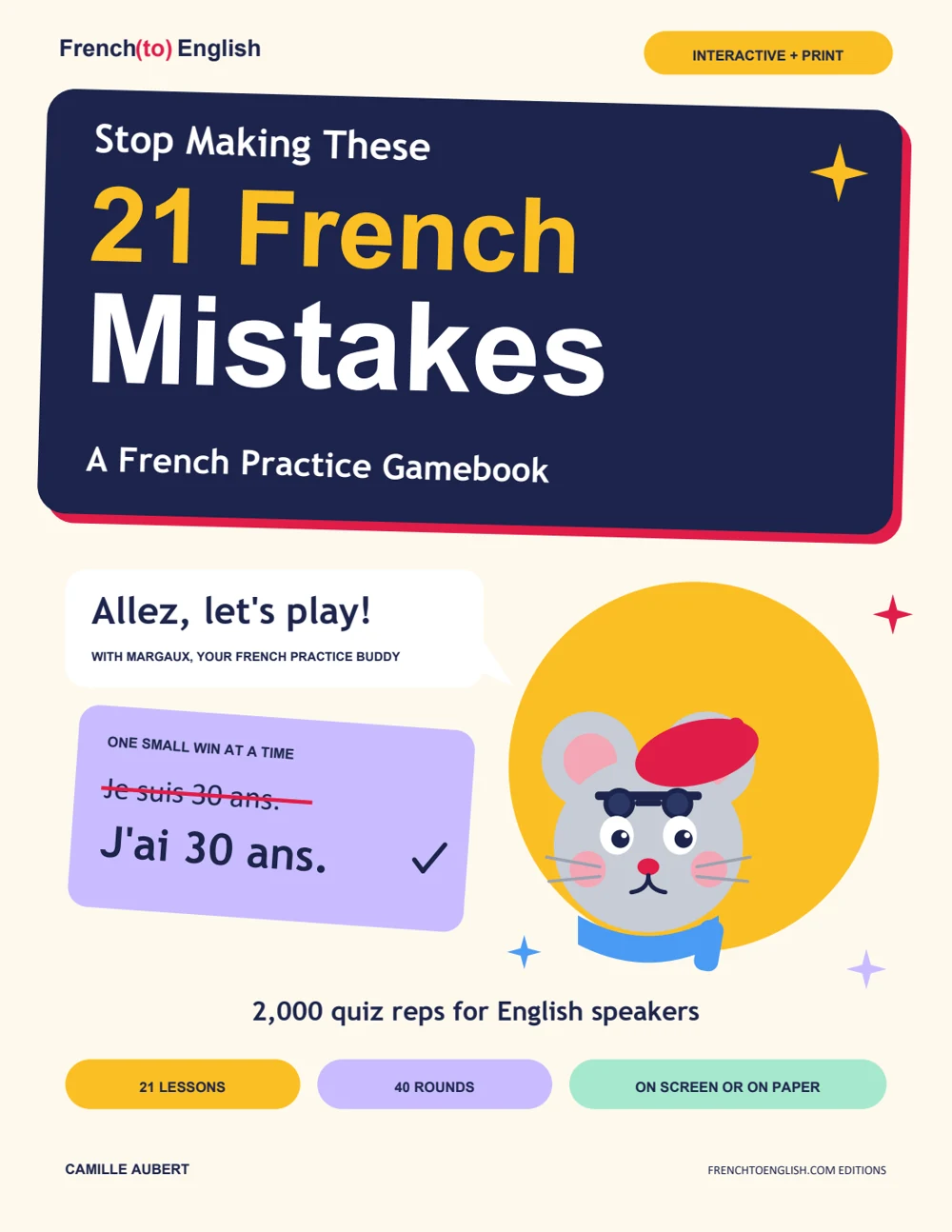
The current Gamebook product page describes one PDF with 21 lessons and 2,000 questions across 40 rounds. Its automatic scoring is designed for desktop Adobe Acrobat Reader; printing is another way to practise. These are product specifications, not evidence of a guaranteed learning result.
If you first want short browser practice, visit the site's Playground.
Choose the format you will actually be able to use
Think about where and when you intend to practise. A short browser session may suit a break at a desk. A printable page may suit annotation away from a screen. An interactive PDF may suit someone who wants exercises in a single file and has the compatible software available.
Check the resource's actual requirements before purchasing or planning your routine around it. Do not assume that a feature available in one viewer works identically in every phone preview or browser. If automatic scoring is essential to you, compatibility is part of the purchase decision rather than a detail to discover afterwards.
Separate the convenience of the format from the quality of the exercise. A resource can be easy to open but provide little useful feedback. Another can contain helpful practice but fit your routine poorly. You need both a suitable task and a format you can use consistently.
Understand what the Gamebook offers
The linked product is a downloadable PDF for practice with common French mistakes. Its product page describes 21 lessons, 40 rounds and 2,000 questions. The automatic-scoring workflow is intended for desktop Adobe Acrobat Reader, and the material can also be printed. Check the current product page for the complete offer and compatibility information.
Those specifications help you judge quantity and format. They do not prove that finishing the file will produce a particular CEFR level or eliminate every mistake in spontaneous speech. Your review and other practice remain relevant to what you can do beyond the questions.
If you enjoy repeated question rounds and want the material collected in one purchase, the format may suit you. If you are looking specifically for live conversation feedback or a listening course, check those needs separately. Do not buy a resource for features its product page does not promise.
Evaluate a free option with the same questions
Free practice deserves the same inspection as paid practice. What does the task require? What happens after an error? Can you revisit the explanation? Does the format encourage the skill you actually want to practise? The absence of a price does not answer those questions either way.
Try a small sample before committing substantial study time. Make one deliberate error, one careful answer and one changed example after the round. This gives you a concrete view of the feedback and the follow-up work you may need to supply yourself.
The site's Playground is a place to explore available browser practice. Use the current page to see what is offered rather than assuming every format discussed in this article is present there. This guide compares types of activities; it is not a verified catalogue of every game on every platform.
Keep a simple purchase decision sheet
Write the skill you want, the format you can use and the kind of feedback you need. Then compare those requirements with the actual description and preview of the resource. Leave a question mark wherever the offer does not establish a feature. A missing answer is a reason to check, not a reason to assume the feature is included.
Consider how you will use the material after the first round. If you want to annotate errors, confirm that your chosen format supports your workflow. If you want another person to give feedback, decide how you will bring a few examples to that session without sharing material beyond the permitted use.
The decision should be proportionate to the purchase. You do not need a complex evaluation system for every inexpensive exercise book, but you should know what you are buying and why it fits the gap you identified. That prevents a collection of resources from substituting for a usable study routine.
Try a short diagnostic round
These original questions show how to review a decision. They are not taken from the paid book.
- Complete “I am cold”: Je ___ froid. Choose suis or ai.
- Complete “She speaks well”: Elle parle ___. Choose bon or bien.
- Choose “at my friend's home”: chez mon ami or à mon ami.
Answers: ai, bien, chez mon ami. French uses avoir in avoir froid; bien describes how someone speaks; chez identifies someone's home or place in this expression.
Now produce a new example for each without the options. Change the subject, use another activity with bien, then name another person after chez. If you can only remember the original answer, the next practice step is to vary the sentence.
Round one: explain an expression, then change the subject
Start with “J'ai froid”. Explain in English that the expression uses avoir. Now say “We are cold” and check that you change the verb to avons. The task is no longer simply choosing ai from a pair of options; it requires adapting the expression to a new subject.
Try another checked expression: “Tu as faim”. Change it to “Vous avez faim”. Explain the change without claiming that every physical state follows this pattern. Keep your explanation limited to the expressions you have verified.
Record what caused any difficulty. If you remembered avoir but could not produce the plural form, your next task is conjugation within the expression. If you used être because you translated English word by word, your next task is recalling the complete French phrase.
Round two: compare an adjective and an adverb
Read the original pair “C'est un bon livre” and “Elle parle bien”. Explain what bon describes in the first and what bien tells you in the second. Then make a new sentence with a checked noun phrase using bon and another with a familiar verb using bien.
Do not judge the exercise only by whether the two target words appear somewhere in your answer. The sentence must express the intended meaning. If you are unsure about a new example, keep the model and ask a reliable reference or teacher to check the variation.
For a partner game, one person supplies the intended meaning in English and the other makes a short French sentence. Keep the examples narrow enough that you can verify them. The aim is to investigate the contrast, not generate increasingly complicated sentences that nobody can confidently correct.
Round three: use chez in a short exchange
Begin with “Je suis chez mon ami”. Ask a partner to give another person or place associated with someone, then form a checked variation. Keep the expression connected to its meaning rather than treating chez as a word that can replace every English “at”.
Add a question: “Tu es chez toi ?” and answer with an appropriate short sentence. You now have a small exchange instead of an isolated vocabulary item. If you change the person, check the pronoun and the intended location carefully.
After the round, write one example you can use confidently and one question you still have. A good exercise can reveal the boundary of your knowledge. You do not need to resolve every possible use of chez before making progress with the simple expressions in this round.
Add a listening decision to the same material
Ask a partner to read one of two familiar sentences without showing it. Your task is to identify which was said and explain its meaning. Use expressions you have already checked so the exercise focuses on recognising the spoken form rather than decoding unfamiliar grammar at the same time.
You can then repeat the sentence and change one detail. This creates a sequence of listening, checking and production. Keep notes on which stage caused difficulty. If you heard the sentence correctly but could not change the subject, the listening stage succeeded even though the later task needs work.
The bilingual audio on this page offers another way to inspect short phrases. Use the English translation to check meaning, then hide it when you want to test comprehension. A visible translation is helpful support, but a correct answer while reading it provides different evidence from understanding the audio alone.
Score the round without pretending it is a level test
For each item, record recognition, explanation and production separately. You might recognise all three answers but explain only two and produce one changed example. That result gives you a practical review plan. It does not translate into an official language level or predict an exam score.
Use a simple mark for each stage and a short note on the error. Avoid a complicated percentage that makes a tiny sample appear more precise than it is. Three examples cannot represent every part of your French, but they can reveal a specific expression or contrast worth practising.
Repeat later with changed examples and compare the task results. Improvement on the original round may reflect familiarity with its wording. Handling a new, checked example gives additional information about whether the pattern is available beyond the memorised item.
Turn scores into a study plan
Keep three notes after a round: one rule to review, one word to retrieve and one sentence to say. Revisit the difficulty after a gap using a changed example. A replay score can show familiarity with that round; a new example gives additional information about the pattern.
Useful phrases to keep
Continue with a game-based session method, online game formats, vocabulary games, word games or games for adults, depending on the difficulty you identified.
Build a short session around one observed difficulty
Suppose you correctly recognised avoir froid but hesitated when changing the subject. Begin the next session with two checked subject changes. Say them without looking, compare with the model and correct the form. Then use one in a short exchange. This keeps the session tied to evidence from the previous round.
Do not add five unrelated grammar topics because the resource contains them. You can explore other rounds later. A focused review gives you a clearer way to tell whether the difficulty has changed and prevents the correction list from becoming too large to use.
End with one next action. “Practise the plural forms in these two expressions” is concrete. “Improve grammar” is not. The smaller note also makes it easier to resume after a busy day without spending the whole session deciding where to begin.
Balance repetition with a changed task
Repetition lets you revisit a familiar item, while a changed task asks something new of the same language. Use both deliberately. You might replay the original questions, then remove the options, then use the expression in a short answer to a partner.
If you only replay identical items, your score may rise while the language remains difficult elsewhere. If you change everything immediately, you may not know which part caused the problem. Move between a stable model and a manageable variation so the feedback remains interpretable.
Choose a review rhythm that fits your routine. This article proposes a practical method, not a scientifically calibrated schedule or a guarantee of results. Keep the record simple enough to maintain and adjust the exercise when your notes show that a particular difficulty persists.
Give enjoyment a role without confusing it with evidence
You are more likely to choose an activity again if you find it pleasant, but enjoyment does not tell you exactly which skill it practises. Keep both questions in view: do you want to return to the game, and what can you do with the language afterwards?
If a format is enjoyable but narrow, add a small follow-up instead of discarding it. Use a word from the puzzle in a sentence or explain one multiple-choice answer aloud. If the format is so frustrating that you stop before reviewing anything, simplify the task or choose another format.
The useful game is the one that has a clear place in your study. It can be a short warm-up, focused error practice or a structured round followed by conversation. It does not need to become your entire method to earn that place.
Work through three different learner profiles
Consider a fictional learner, Sam, who scores well on written choices but cannot retrieve the same phrases aloud. Sam does not need to interpret the score as dishonest; it describes a real recognition skill. The next exercise simply needs another demand. Sam hides the options, answers an English intention in French and uses one phrase in a short exchange.
A second fictional learner, Riley, can say the prepared opening but misses the reply. Another written grammar round may be enjoyable, but the observed gap concerns listening. Riley practises two possible replies, identifies the changing detail and confirms it aloud. The game choice follows the difficulty rather than the highest available score.
A third learner, Morgan, enjoys word puzzles but forgets how to use the words afterwards. Morgan keeps the puzzle and adds an article, a meaning check and one short phrase for each selected noun. The follow-up is small enough to fit the activity instead of turning every completed puzzle into an overwhelming assignment.
These profiles are examples of planning, not case-study evidence or promises about outcomes. Their purpose is to show how the same question—what remains difficult?—can lead to different useful tasks. You can borrow the decision process while choosing the language and format that fit your own circumstances.
Create a ten-item evaluation sample
If a resource offers a preview or free sample, select a small group of items you can inspect carefully. Note the topic of each, whether the context is clear and what feedback appears. Mark any answer whose explanation you cannot apply to a changed example. You are evaluating the resource's fit, not conducting a formal study.
Include at least one item you find easy and one you find difficult. The easy item lets you check whether the explanation agrees with language you already understand. The difficult item shows what support the resource provides when you need it. A sample containing only easy questions may tell you little about the quality of error review.
Afterwards, try one sentence without choices. If the sample reveals a useful pattern and you can see how to review mistakes, that is practical information for your decision. If the format leaves you uncertain about every correction, identify what additional support you would need before committing more time or money.
Keep an honest record of what the game established
Write a narrow conclusion after the sample. “I answered eight of these ten written questions correctly” is supported by the round. “I can now speak French at B1” is not. The difference is not pessimism; it keeps the result connected to the task you actually performed.
Add the follow-up result separately: you made two new sentences, understood one spoken contrast or needed help with a conjugation. This gives you a fuller picture without forcing all the observations into one percentage. It also makes a later session easier to plan because the unresolved difficulty has a name.
When a resource markets a large number of questions, think about how you will review a manageable selection. Quantity can provide variety, but completion alone does not explain what you understood. A small set used attentively may be the right starting point before you decide how to work through the rest.
Choose the next format from the evidence
Use your notes to select a next step: more contrast practice for a confused form, recall prompts for words you only recognise, listening replies for missed spoken details or role-play for responding in context. You can combine formats over time without expecting one activity to solve every difficulty. The product links below offer different kinds of written support; choose according to the task you want to practise.
Inspect a complete round
Play or inspect one complete round of a game you are considering. Record what the learner actually does: recognises a translation, recalls a word, builds a sentence, listens for a detail or responds to another person. The interface alone does not tell you which skill is practised.
Make a low-stakes mistake and examine the feedback. Does it reveal an answer, explain a distinction or let you retry with a different example? Check whether the correction remains available after the round, especially if you plan to review independently.
Try the language outside the original game. Describe a different picture or answer a changed question without choices visible. Use that result to decide where the activity belongs in your routine. It may be a useful tool while another activity provides the listening or conversation practice it does not include.
Useful phrases to keep
| 🇫🇷 French | 🇺🇸 English | 💡 Context |
|---|---|---|
| Je choisis cette réponse parce que… | I choose this answer because… | Explaining a game answer |
| J’ai confondu les deux mots. | I confused the two words. | Identifying a vocabulary mix-up |
| Je vais essayer sans les choix. | I will try without the options. | Testing recall without options |
| Peux-tu donner un autre exemple ? | Can you give another example? | Checking whether a rule transfers |
The French Gamebook
Give your study routine something to practise.
For English speakers practising French
Pick a lesson, play a round and note the mistakes you want to revisit. The Gamebook gives your next session a concrete task and answers to check.
- 21 lessons with explanations
- 40 practice rounds · 2,000 questions
300 pages · Play on your computer or print
Get the Gamebook · $9 Read a preview before you buyOne payment · Instant PDF download
Try the French with someone who can reply.
Bring a sentence you found difficult. Ask a tutor to help you say it naturally, then try it in a short conversation.
Find a French tutor →Paid lessons. Compare tutors and prices before booking.
Affiliate link: we may earn a commission when you book.
📚 Keep building in the Learning Center
French Learning Games for Adults: Pick a Format That Fits Your Life
French games for adults work best when the task feels useful and everyone can participate. Plan cooperative or…
Read →Learn French with a Game: Turn One Round into a Useful Study Session
To learn French with a game, choose one small language goal and make the rules serve it. Build…
Read →French Translation Mistakes: Checking Google Translate
Check French machine translations for context, idioms and register. Compare possible errors and follow a practical revision workflow.…
Read →