French Job Interview Guide: Essential Questions and Answers for Success
You’ve landed an interview at a French company or with a French-speaking employer, but anxiety hits when you realize the interview will be conducted entirely in French with questions about your professional weaknesses, career goals, and salary expectations using vocabulary you’ve never learned. American-style interview answers that work in English sound awkward or culturally inappropriate when directly translated to French, and you don’t know which French business phrases actually impress employers versus which ones mark you as unprofessional. This complete guide covers essential French job interview questions with culturally appropriate answers, professional vocabulary, salary negotiation phrases, questions to ask employers, and critical cultural differences that determine whether French hiring managers perceive you as competent or confused.
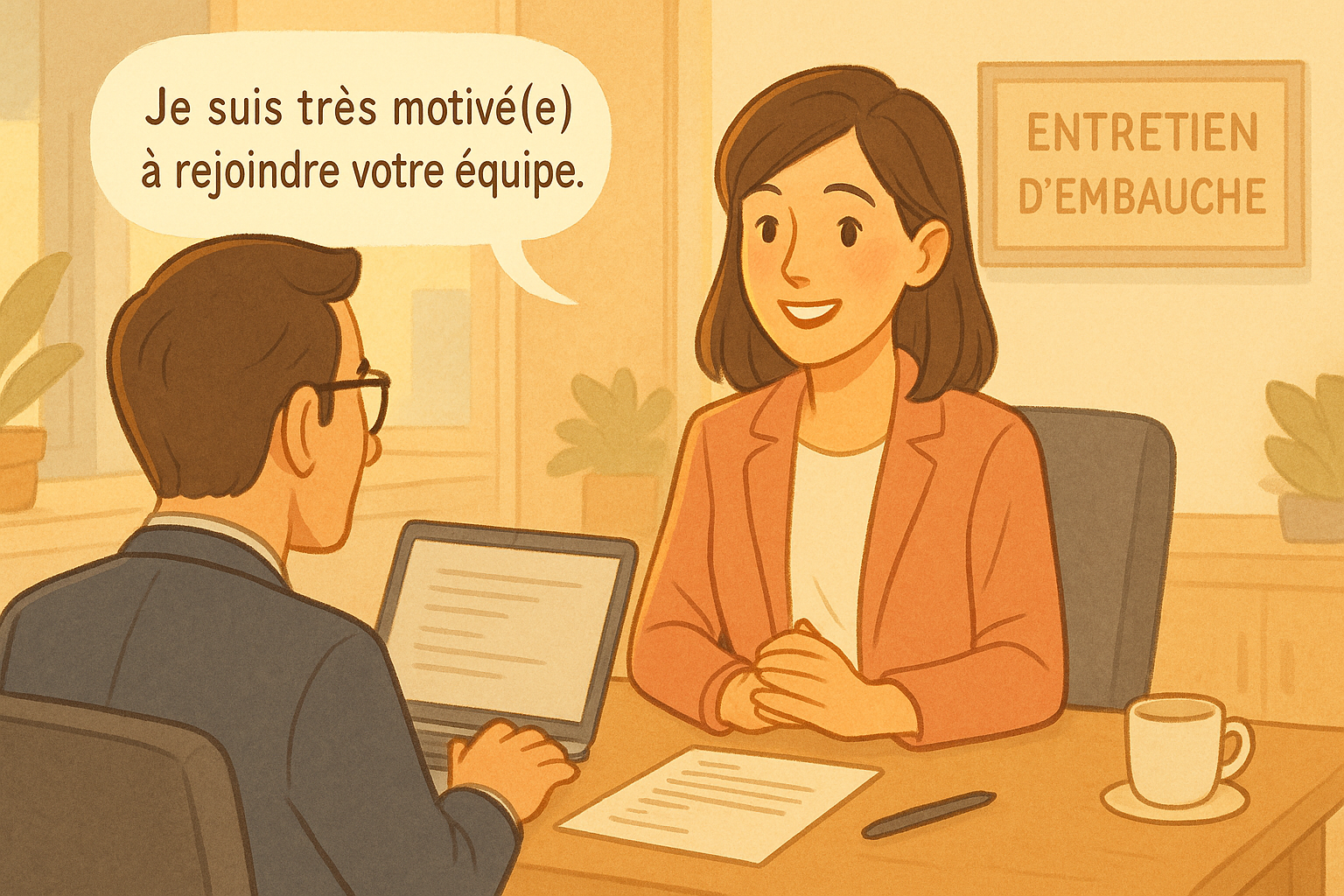
Why French job interviews are different from American ones
French hiring culture operates on different assumptions than American hiring culture. Understanding these differences prevents you from inadvertently signaling unprofessionalism through culturally inappropriate responses.
Education trumps experience in French hiring
American employers prioritize what you’ve accomplished. French employers prioritize where you studied and what degrees you earned. A candidate with a degree from a Grande École (elite French university) but limited experience often beats a candidate with extensive experience from a less prestigious school.
This means French interview questions focus heavily on your educational background, your thesis or dissertation topic if applicable, and your academic achievements. Americans are often surprised how much time French interviewers spend on education rather than practical accomplishments.
Most French textbooks are written by native speakers who’ve forgotten what confuses beginners. They explain grammar assuming you already think like a French person.
Roger learned French as an adult after growing up with English and German. He remembers exactly which explanations clicked and which ones left him confused. The FrenchToEnglish approach was built from those memories, including the professional French vocabulary and cultural understanding he needed to successfully interview for positions in French companies during his career.
Formality level stays high throughout
American interviews often shift from formal to casual as the interview progresses, with first-name basis and friendly banter. French interviews maintain formality from start to finish. You use “vous” (formal you) throughout. You address the interviewer as “Monsieur” or “Madame” until explicitly told otherwise (which rarely happens in interviews).
First names may not be exchanged at all in first-round interviews. This isn’t coldness – it’s professional respect. Attempting American-style casual friendliness during French interviews often backfires, making you seem unprofessional or culturally unaware.
Work-life balance questions are normal and expected
In American interviews, asking about work-life balance can signal lack of commitment. In French interviews, it’s completely normal. French labor law mandates 35-hour work weeks, five weeks of vacation, and strong protections for personal time. Interviewers expect questions about “équilibre vie professionnelle/vie personnelle” (work-life balance).
Essential opening and greeting phrases
First impressions in French interviews begin before you sit down. These phrases set professional tone immediately.
Arriving and greeting the interviewer
🇺🇸 EN — Hello, I’m delighted to meet you
🇺🇸 EN — Thank you for meeting with me today
🇺🇸 EN — It’s a pleasure to be here
Physical greeting: Firm handshake while making eye contact. One shake, not multiple pumps. Say your full name: “Marie Dupont, enchantée.”
Responding to “Tell me about yourself”
🇺🇸 EN — Tell me about yourself / Introduce yourself
Structure your answer:
🇺🇸 EN — I obtained my degree in [subject] from [university], specializing in [field]
🇺🇸 EN — I then worked for X years at [company] as [position]
🇺🇸 EN — I gained solid experience in [skill area]
🇺🇸 EN — Today, I’m looking to take on new challenges in the field of [field]
Order matters: Start with education (diploma, university), then chronological work experience, then skills, then why you’re interviewing. French interviewers expect this structure.
Classic French interview questions with model answers
These questions appear in virtually every French job interview. Prepare specific answers for each.
Question 1: Why do you want to work for our company?
🇺🇸 EN — Why do you want to work for our company?
Model answer structure:
🇺🇸 EN — I admire your leadership position in the [industry] sector
🇺🇸 EN — Your values of innovation and quality align with my professional aspirations
🇺🇸 EN — This opportunity would allow me to develop my skills in [skill]
What French employers want to hear: Research about the company, understanding of their market position, alignment of values, and focus on professional development opportunity (not just salary).
Question 2: What are your strengths?
🇺🇸 EN — What are your strengths?
Model answer with examples:
🇺🇸 EN — My main strength is my analytical ability. For example, in my previous position, I identified an inefficiency that allowed us to reduce costs by 15%
🇺🇸 EN — I’m also recognized for my rigor and organizational sense
🇺🇸 EN — I adapt easily to new situations and learn quickly
French values: Rigueur (rigor/thoroughness), analyse (analytical thinking), organisation (organization), and capacité d’adaptation (adaptability) are highly valued traits.
Question 3: What are your weaknesses?
🇺🇸 EN — What are your weaknesses? / What are your areas for improvement?
Strategy: Choose a real weakness but frame it with how you’re addressing it. Don’t use the cliché “I’m a perfectionist” – French interviewers see through this.
🇺🇸 EN — I tend to want to do everything myself, but I’ve learned to delegate better and trust my team
🇺🇸 EN — I can be impatient when projects move slowly, so I’m working on my patience and understanding of processes
🇺🇸 EN — My English level could be better, which is why I’m taking evening classes
Question 4: Where do you see yourself in 5 years?
🇺🇸 EN — Where do you see yourself in five years?
French career progression emphasis:
🇺🇸 EN — In five years, I’d like to have deepened my expertise in [field] and taken on managerial responsibilities
🇺🇸 EN — I want to evolve within the company and contribute to its development
🇺🇸 EN — My goal is to become a recognized expert in my field
Cultural note: French companies value loyalty. Saying “I plan to start my own company” or “I’ll probably move to another company” signals unreliability. Emphasize growth within the company.
Question 5: Why did you leave your last position?
🇺🇸 EN — Why did you leave your last position?
Diplomatic answers (never badmouth previous employers):
🇺🇸 EN — I’m looking for new professional challenges and development opportunities
🇺🇸 EN — I’ve learned everything I could in that position and want to expand my skills
🇺🇸 EN — The company restructured and my position was eliminated
🇺🇸 EN — I’m looking for an environment where I can have more responsibilities
Talking about skills and experience professionally
French professional vocabulary has specific terms that don’t translate directly from English.
Describing your professional experience
🇺🇸 EN — I held the position of [position] for X years
🇺🇸 EN — I was in charge of [responsibility]
🇺🇸 EN — I successfully led several important projects
🇺🇸 EN — I worked closely with [department/people]
🇺🇸 EN — I acquired solid expertise in [skill]
Discussing achievements and results
🇺🇸 EN — I increased sales by 20% in one year
🇺🇸 EN — I reduced production delays by 30%
🇺🇸 EN — I implemented a new system that improved efficiency
🇺🇸 EN — I managed a team of X people
🇺🇸 EN — I contributed to the development of [project/product]
Quantify when possible: French employers appreciate specific numbers and measurable results, just like American employers.
Technical skills vocabulary
🇺🇸 EN — I master [software/tool]
🇺🇸 EN — I have advanced skills in [skill]
🇺🇸 EN — I specialize in [field]
Soft skills vocabulary
🇺🇸 EN — I have good teamwork spirit
🇺🇸 EN — I’m autonomous/self-sufficient
🇺🇸 EN — I’m capable of working under pressure
Salary discussion – navigating French compensation talk
Salary discussions in France follow different etiquette than in the US. Here’s how to handle them professionally.
When they ask about salary expectations
🇺🇸 EN — What are your salary expectations?
Professional responses:
🇺🇸 EN — I’m looking for a salary in the range of X to Y euros gross per year
🇺🇸 EN — According to my market research and my experience, I think a salary of X euros would be appropriate
🇺🇸 EN — I’m open to discussion depending on the entire compensation package
Critical detail: Always discuss salary in “brut” (gross) annual figures, not monthly net. French employees typically discuss annual gross salary, even though they’re paid monthly.
Asking about compensation and benefits
🇺🇸 EN — What is the salary range for this position?
🇺🇸 EN — What social benefits are offered?
🇺🇸 EN — Is there company health insurance?
🇺🇸 EN — Does the company offer meal vouchers?
🇺🇸 EN — Are there bonuses?
🇺🇸 EN — Is there a 13th month? (year-end bonus)
French benefits context: Many French companies offer tickets restaurant (meal vouchers), mutuelle (supplementary health insurance), participation aux bénéfices (profit sharing), and 13ème mois (extra month’s salary as year-end bonus).
💡 French salary negotiation strategy:
- Research is essential – Use sites like Glassdoor France, salairemoyen.com to know market rates
- Give a range, not a number – Provides negotiation flexibility
- Consider total package – French benefits (5 weeks vacation, healthcare, retirement) add significant value
- Timing matters – Don’t bring up salary first. Let them ask or wait until final interview round
- Be reasonable – French salaries are generally lower than US tech salaries but come with better benefits and work-life balance
Questions you should ask the employer
French interviewers expect you to ask intelligent questions. Not asking questions suggests lack of interest.
Questions about the position
🇺🇸 EN — Can you describe a typical day in this position?
🇺🇸 EN — What are the main challenges of this position?
🇺🇸 EN — What are the opportunities for advancement?
🇺🇸 EN — How is success measured in this role?
🇺🇸 EN — Who would I report to directly?
Questions about company culture
🇺🇸 EN — How would you describe the company culture?
🇺🇸 EN — What is the management style?
🇺🇸 EN — How does the team work together?
🇺🇸 EN — Are there opportunities for continuing education?
🇺🇸 EN — What is the remote work policy?
Questions about next steps
🇺🇸 EN — What are the next steps in the recruitment process?
🇺🇸 EN — What is the decision timeline?
🇺🇸 EN — Will there be additional interviews?
🇺🇸 EN — When can I expect to hear from you?
Common interview mistakes to avoid
⚠️ Mistake 1: Being too casual or overly friendly
American interview style emphasizes personality and cultural fit through casual conversation. French interviews maintain professional distance.
Don’t do:
- Use first names without invitation
- Make jokes or tell personal stories
- Ask about the interviewer’s weekend or personal life
- Try to be “buddies” with the interviewer
Do instead:
- Maintain professional courtesy throughout
- Use “vous” form consistently
- Keep responses focused on professional topics
- Let the interviewer set the tone
⚠️ Mistake 2: Appearing arrogant or overly confident
American interview advice says “sell yourself” and “show confidence.” French culture values modesty and nuance.
Wrong approach: “I’m the best candidate you’ll find. I always exceed expectations. I’m a natural leader.”
Better approach:
🇺🇸 EN — I think my experience corresponds well to the position’s needs
🇺🇸 EN — I obtained good results in similar situations
Tone: Confident but humble. Competent but not boastful. Use “je pense” (I think) and “il me semble” (it seems to me) to soften strong statements.
⚠️ Mistake 3: Not preparing specific examples
French interviewers ask behavioral questions expecting concrete examples from your experience.
🇺🇸 EN — Give me an example of a difficult situation you handled
Bad answer: “Je gère bien les situations difficiles en restant calme.” (Too vague)
Good answer: Use STAR method (Situation, Task, Action, Result) with specific details from your experience.
⚠️ Mistake 4: Dressing inappropriately
French business dress codes are more formal than American tech company standards.
Safe choices:
- Men: Dark suit, white or light blue shirt, conservative tie, polished leather shoes
- Women: Suit (jacket + skirt or pants), conservative blouse, closed-toe shoes with modest heel
- Everyone: Minimal jewelry, subtle makeup, neat hair, no strong perfume/cologne
When in doubt: Overdress rather than underdress. French business culture values professional appearance.
Study glossary – Job interview vocabulary
| FR | EN | Usage Context |
|---|---|---|
| Un entretien d’embauche | A job interview | Je passe un entretien demain |
| Le recruteur / La recruteuse | The recruiter | Le recruteur m’a contacté |
| Le poste | The position | Ce poste m’intéresse beaucoup |
| Les compétences | Skills | J’ai les compétences requises |
| L’expérience professionnelle | Professional experience | J’ai 5 ans d’expérience |
| Les prétentions salariales | Salary expectations | Quelles sont vos prétentions ? |
| Les avantages sociaux | Benefits | Quels sont les avantages ? |
| Le CV (curriculum vitae) | Resume/CV | Voici mon CV |
| La lettre de motivation | Cover letter | J’ai joint ma lettre |
| Les références | References | Je peux fournir des références |
| La période d’essai | Trial period/probation | La période d’essai est de 3 mois |
| Un CDI (contrat à durée indéterminée) | Permanent contract | Je cherche un CDI |
| Un CDD (contrat à durée déterminée) | Fixed-term contract | C’est un CDD de 6 mois |
| Le délai de préavis | Notice period | Mon préavis est de 3 mois |
Your interview preparation action plan
These techniques work, but they work faster with structured learning designed for English speakers. Roger’s approach teaches you how to rewire your English-speaking brain for French patterns.
Here’s your complete preparation timeline:
2 weeks before interview: Research the company thoroughly in French. Read their website, recent news, LinkedIn updates – all in French. Write out answers to the 10 most common questions in French. Practice pronunciation of professional vocabulary. Record yourself answering questions.
1 week before: Prepare 5-7 specific examples from your experience using STAR method. Write them in French. Practice telling these stories naturally. Prepare intelligent questions to ask the employer. Review industry-specific vocabulary in French.
3 days before: Do mock interviews in French with a native speaker if possible, or at minimum record yourself. Practice your opening greeting and closing thank-you. Prepare professional attire. Print extra copies of your CV in French.
Day before: Review your prepared answers one final time. Confirm interview location and arrival time. Prepare questions about logistics if needed. Get good sleep – exhaustion makes speaking foreign languages much harder.
The goal isn’t memorizing scripts word-for-word. The goal is internalizing professional French vocabulary and cultural norms so you can respond naturally and appropriately to whatever questions arise.
French job interviews test three things simultaneously: your professional qualifications, your French language ability, and your cultural fit with French business norms. English speakers often focus only on the first, neglecting the second and third. All three matter equally.
You don’t need perfect French to succeed in French job interviews. You need good enough French delivered with appropriate cultural awareness. A candidate with B1 French who understands formality levels, uses professional vocabulary correctly, and demonstrates cultural sensitivity often beats a candidate with B2 French who treats the interview like an American casual conversation.
The fact that you’re reading this guide in English and preparing to interview in French shows determination and cultural intelligence – qualities French employers value. Use that to your advantage by explicitly acknowledging your bilingual journey as a professional strength.