

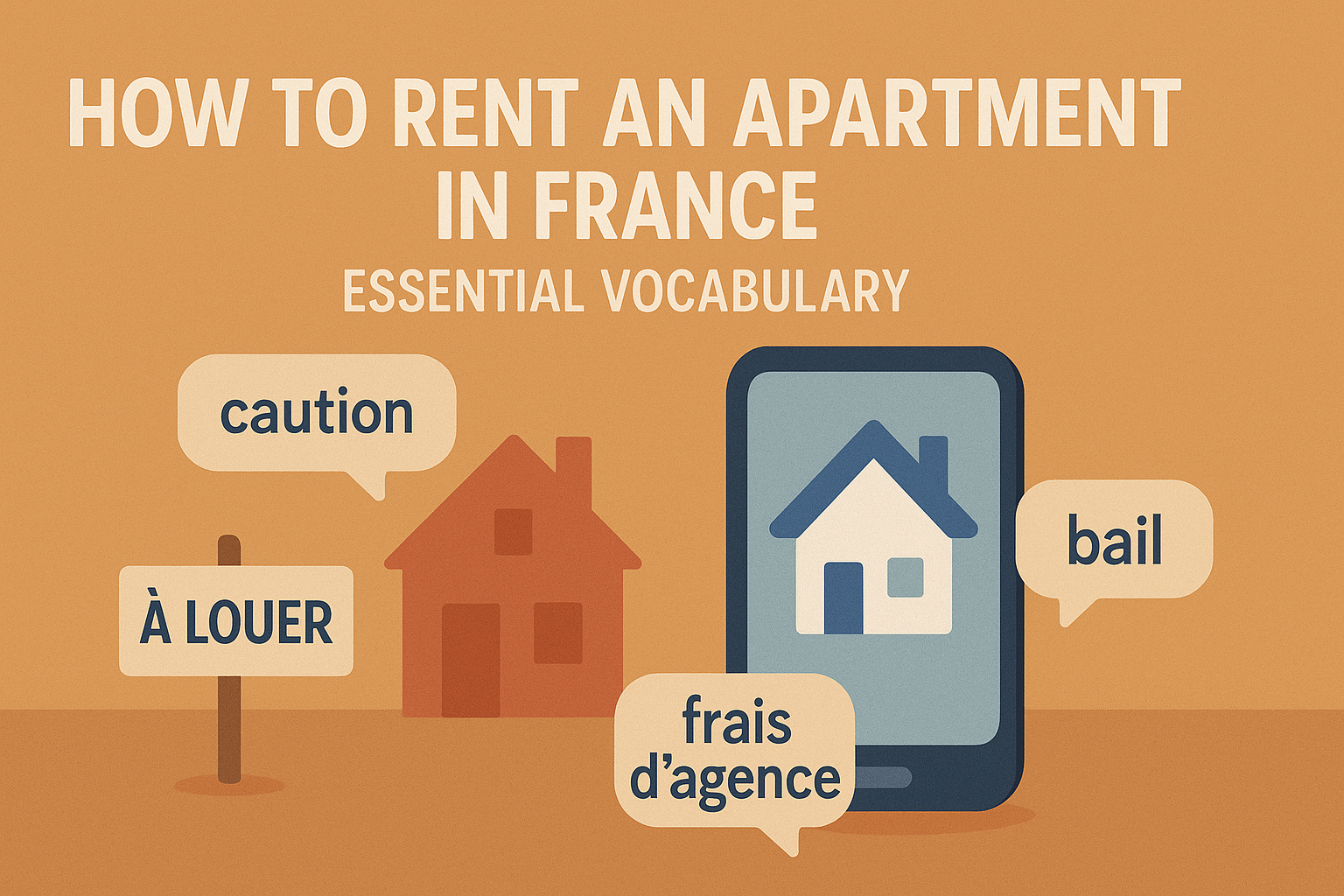
How to Rent an Apartment in France: Essential Vocabulary (B1-B2)
You’re moving to France for work, studies, or personal reasons and need to rent an apartment, but you’re completely overwhelmed by confusing French real estate terminology like “T2,” “F3,” “charges comprises,” mysterious administrative requirements including the infamous “dossier de location” demanding documents you’ve never heard of, landlords who expect formal French communication you weren’t taught in textbooks, viewing appointments where you struggle to ask basic questions about heating, internet, or building rules, lease contracts filled with legal terms you can’t decipher, and a rental system that operates on completely different assumptions than Anglo-American housing markets, leaving you vulnerable to mistakes, scams, and missed opportunities in competitive French cities where apartments disappear within hours and landlords favor tenants who speak proper French and understand the cultural expectations around renting that determine whether you secure housing or continue searching desperately.
Why French apartment hunting is so different from the US/UK
The French rental system operates on fundamentally different principles than Anglo-American housing markets. What seems straightforward in English-speaking countries becomes a bureaucratic maze in France, with unique terminology, legal requirements, and cultural expectations that textbooks never prepare you for.
🇺🇸 Renting an apartment in France requires lots of paperwork and patience
Roger learned this firsthand when he moved to France in 2012 and faced the daunting task of securing his first French apartment. The experience was so challenging that he now includes practical housing vocabulary and cultural tips in his French lessons, because understanding rental French isn’t just about vocabulary – it’s about navigating a system foreigners find bewildering.
Understanding French apartment classifications
The T/F numbering system explained
French apartments use a numbering system completely different from English-speaking countries. Instead of counting bedrooms, French classifications count “main rooms” (excluding kitchen and bathroom).
🇺🇸 A studio apartment (one main room serving as bedroom and living room, separate kitchen/bathroom)
🇺🇸 A one-bedroom apartment (bedroom + living room = 2 main rooms)
🇺🇸 A two-bedroom apartment (2 bedrooms + living room = 3 main rooms)
🇺🇸 A three-bedroom apartment (3 bedrooms + living room = 4 main rooms)
T vs F distinction: “T” (Type) is used in newer buildings, “F” (Fonction) in older buildings. They mean the same thing. Both systems count identically.
Critical for apartment hunting: When landlords say “T2,” they mean ONE bedroom plus a separate living room. This confuses English speakers who think “2” means two bedrooms!
Additional apartment types and features
🇺🇸 A two-story apartment (duplex)
🇺🇸 An apartment with a loft/mezzanine level
�U🇸 A loft apartment (open space, usually former industrial)
🇺🇸 A small room under the roof (originally maid’s quarters, now small studios)
🇺🇸 A furnished apartment
🇺🇸 An unfurnished apartment
🇺🇸 An apartment with balcony / terrace
🇺🇸 Ground floor apartment
🇺🇸 Top floor apartment
🇺🇸 With elevator / Without elevator (critical for 5th floor walkups!)
Essential rental vocabulary – the basics
Key rental terms you’ll use constantly
🇺🇸 The rent (monthly payment to landlord)
🇺🇸 Utilities / Common area charges (water, heat, building maintenance)
🇺🇸 Utilities included in rent
🇺🇸 Utilities not included (you pay separately)
🇺🇸 Security deposit (usually 1 month rent for unfurnished, 2 months for furnished)
🇺🇸 Real estate agency fees (tenant often pays, usually 1 month rent)
🇺🇸 The lease / rental contract
🇺🇸 The landlord / owner
🇺🇸 The tenant / renter
🇺🇸 Move-in inspection report (document condition when you move in)
🇺🇸 Move-out inspection report (compared to entry report for deposit return)
🇺🇸 Notice period (how far in advance you must notify before leaving)
⚠️ Critical distinction: Charges comprises vs charges non comprises
This catches foreigners constantly. Always clarify whether charges are included or separate:
🇺🇸 Rent is 800€ utilities included (you pay 800€ total)
🇺🇸 Rent is 800€ plus utilities, approximately 100€ utilities (you pay ~900€ total)
Landlords advertise with impressive low numbers “hors charges” then you discover utilities add 100-200€ monthly. Always ask: “Les charges sont comprises ou non comprises ?”
The infamous “dossier de location” – documents needed
Required documents for renting in France
French landlords demand extensive documentation before approving your application. Prepare these documents BEFORE apartment hunting to move quickly when you find something good.
🇺🇸 ID document (passport, carte de séjour for foreigners)
🇺🇸 Proof of current address (utility bill, previous lease)
🇺🇸 Last three pay stubs (salary proof)
🇺🇸 Last tax return (shows annual income)
🇺🇸 Employment contract (especially if recently hired)
🇺🇸 Last three months bank statements
🇺🇸 A guarantor (person who guarantees rent payment if you default)
🇺🇸 Guarantor’s documents (same documents as tenant)
Income requirement: French landlords typically require tenants earn 3x monthly rent. If you earn 2,000€/month, you can afford maximum ~650€ rent. If insufficient income, you MUST provide a guarantor.
⚠️ The guarantor challenge for foreigners
Many foreigners struggle with the “garant” requirement. French landlords want guarantors who:
- Live in France (ideally)
- Own property in France
- Have stable French income
- Earn 3x the rent themselves
If you lack a French guarantor, alternatives exist:
🇺🇸 Visale (government guarantee program for young people and employees)
🇺🇸 Bank guarantee (deposit money in blocked account)
🇺🇸 Pay several months rent in advance (sometimes accepted)
Roger helps students navigate these practical challenges in his conversation-focused lessons, including how to explain your situation to landlords when you lack typical French documentation.
Viewing apartments – essential questions to ask
Practical questions for apartment viewings
🇺🇸 What’s the rent including utilities?
🇺🇸 How much do utilities cost on average per month?
🇺🇸 How much is the security deposit?
🇺🇸 Are there agency fees?
🇺🇸 Is the apartment furnished or unfurnished?
🇺🇸 Is heating individual or communal? (affects costs significantly)
🇺🇸 What type of heating? Electric, gas, or other?
🇺🇸 Is there fiber / internet connection?
🇺🇸 What floor is the apartment on?
🇺🇸 Is there an elevator in the building?
🇺🇸 What’s the notice period if I want to leave?
🇺🇸 When is the apartment available?
🇺🇸 Can I visit again with someone? (bring a friend for second opinion)
💡 Roger’s apartment viewing strategy:
When Roger was apartment hunting in France, he learned to ask these strategic questions that reveal problems:
- “Pourquoi le locataire actuel part-il ?” (Why is the current tenant leaving?) – reveals potential issues
- “Y a-t-il eu des problèmes d’humidité ou de moisissure ?” (Have there been humidity or mold problems?) – common in French apartments
- “Les voisins sont-ils bruyants ?” (Are the neighbors noisy?) – important in French apartment buildings
- “Peut-on repeindre les murs ?” (Can we repaint the walls?) – know renovation restrictions upfront
These questions show you’re serious and knowledgeable about French rentals, which landlords appreciate. Roger teaches practical conversation skills like this in his lessons because textbooks teach grammar but not real-world apartment hunting French.
Lease terms and legal vocabulary
Understanding your rental contract
🇺🇸 Lease duration (typically 3 years for unfurnished, 1 year for furnished)
🇺🇸 Rent subject to annual increase (tied to IRL index)
🇺🇸 Rent Reference Index (legal limit on annual rent increases)
🇺🇸 3-month notice period (unfurnished apartments)
🇺🇸 1-month notice period (furnished apartments)
🇺🇸 Joint liability clause (all roommates equally responsible for full rent)
🇺🇸 Mandatory renter’s insurance (required by law in France)
🇺🇸 Notice to vacate because landlord is selling (must give you first refusal)
🇺🇸 Return of security deposit (within 1-2 months after move-out)
🇺🇸 Tenant’s maintenance responsibilities (minor repairs you must handle)
Communicating with landlords and agencies
Professional phrases for rental communication
🇺🇸 I’m interested in your listing for the one-bedroom at [address]
🇺🇸 Would it be possible to visit the apartment this week?
🇺🇸 I can provide all necessary documents for the application
🇺🇸 I have a permanent contract since [duration] with salary of [amount]
🇺🇸 My guarantor is my father who lives in France
🇺🇸 When could I move in if my application is accepted?
🇺🇸 There’s a problem with [issue], could you have it repaired?
🇺🇸 I’m informing you that I wish to leave the apartment. Here’s my notice.
Common apartment features and amenities
Rooms and spaces
🇺🇸 Equipped kitchen (with appliances)
🇺🇸 Small kitchen area (usually in studios)
🇺🇸 Bathroom (with bathtub)
🇺🇸 Shower room (with shower, no bathtub)
🇺🇸 Separate toilet (toilet in separate room from bathroom – common in France)
🇺🇸 Walk-in closet / Built-in closet
🇺🇸 Storage cellar (basement storage space)
🇺🇸 Parking space (often costs extra 50-150€/month)
Appliances and equipment
🇺🇸 Refrigerator / Fridge
🇺🇸 Stove / Cooktop
🇺🇸 Oven
🇺🇸 Dishwasher
🇺🇸 Washing machine
🇺🇸 Dryer (rare in French apartments)
🇺🇸 Air conditioning (very rare in French apartments)
🇺🇸 Central heating
Study glossary – Essential rental vocabulary
| FR | EN | Usage Context |
|---|---|---|
| Louer un appartement | To rent an apartment | Je cherche à louer un T2 |
| Le loyer | The rent | Le loyer est de 900€ par mois |
| Les charges | Utilities / Building charges | Les charges sont de 100€ |
| La caution | Security deposit | La caution est d’un mois de loyer |
| Le bail | Lease / Rental contract | Signer le bail |
| Le préavis | Notice period | Donner son préavis de 3 mois |
| Le propriétaire | Landlord | Contacter le propriétaire |
| Un garant | Guarantor | Avoir un garant en France |
| L’état des lieux | Move-in/out inspection | Faire l’état des lieux d’entrée |
| Meublé / Vide | Furnished / Unfurnished | Un appartement meublé |
| Les frais d’agence | Agency fees | Payer les frais d’agence |
| Une visite | A viewing | Organiser une visite |
Master practical French for apartment hunting with Roger
Finding and securing an apartment in France requires more than vocabulary – you need cultural knowledge about the rental system, confidence communicating with landlords in appropriate formal French, and understanding of French tenant rights and responsibilities that textbooks don’t teach.
🇺🇸 Apartment hunting in France is more complicated than you’d think
Roger remembers his own apartment hunting challenges after moving to France in 2012. The experience taught him exactly what foreigners struggle with when renting in France – not just vocabulary, but the entire cultural context around housing. In his practical French lessons, Roger teaches:
- How to write professional French emails to landlords and agencies
- What to say during apartment viewings to make good impressions
- How to explain your situation when you lack typical French documentation
- Understanding lease contracts and tenant rights in France
- Negotiating rent and conditions (when possible) in appropriate French
Roger reviews your actual rental correspondence, helps you prepare for viewings with role-play practice, and teaches the cultural nuances that help you compete successfully in France’s competitive rental market. The €9 trial lesson lets you experience this practical, real-world approach to French.