
C2 French Lessons: Precision and Clear Reformulation
Examine how wording changes emphasis and interpretation. Resolve ambiguous references, compare focus structures and use nominalisation without hiding who acts. Practise revising a sentence while preserving its meaning.

 C2? Chapeau! Even I take notes. 🎩
Pay attention to what the words imply.
Work like an editor: identify the action, the agent and the claim before changing the sentence. Compare nominal groups with clauses, examine what receives emphasis, and decide whether added density helps the reader. A successful revision preserves the facts as well as the intended tone.
A useful way to begin
Compare two versions of the same idea. Ask what has changed in meaning, register or implication, then revise a sentence without losing the nuance.
This collection covers the lessons currently available at this level. Follow the themes that help you; it is not a complete CEFR course. Not sure where to start? Try the level quiz.
Examine fine distinctions and ambiguity
Identify ambiguity in scope and reference, then revise without adding unsupported claims.
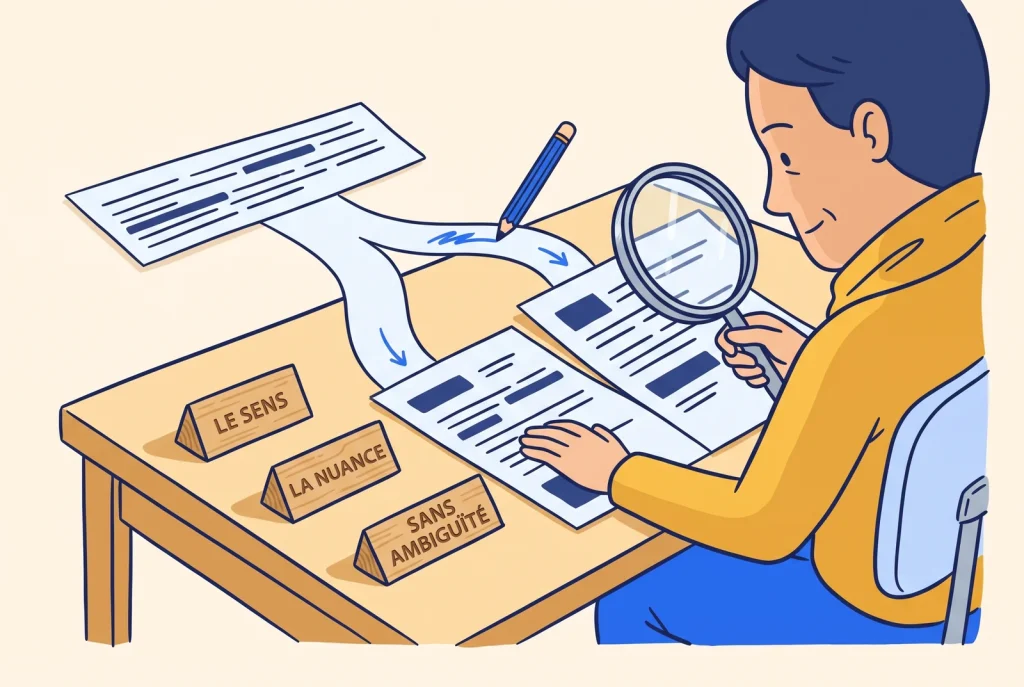
Put it into practice

Try it yourself
Read French Ambiguity and compare alternative readings. Rewrite the passage only after identifying what the source actually establishes.
Refine the details of how you speak.
Explore subtle differences in tone and meaning. Ask your tutor to challenge your phrasing and suggest alternatives.
Find a French tutor →Paid lessons. Compare tutors and prices before booking.
Affiliate link: we may earn a commission when you book.
Reformulate without losing intention
Preserve a speaker's meaning while changing audience or register.
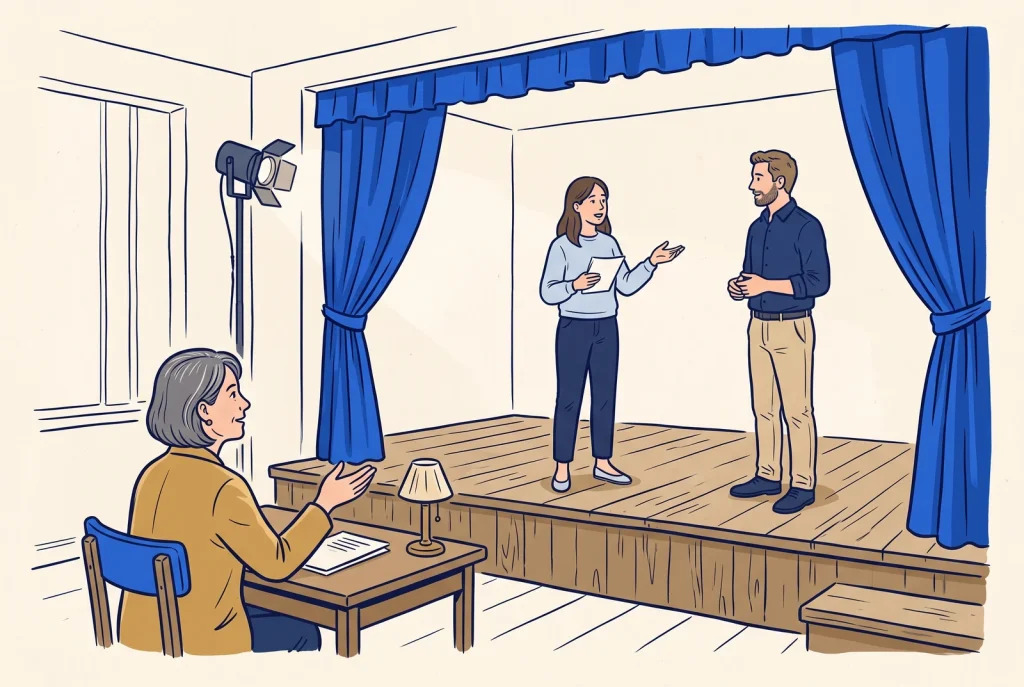
Put it into practice
Try it yourself
Rephrase a passage with a cleft or a detached topic. Explain what receives focus and check that no unsupported exclusive claim has been added.
Compare framing across sources
Distinguish reported facts, framing and inference.
Put it into practice

Try it yourself
Choose a Briefing and read its linked sources. Compare what each foregrounds and leaves implicit, then write a synthesis that attributes claims clearly.
Revise a sustained piece for precision and style
Revise nominal groups and clauses while preserving the agent, facts and intended register.

Put it into practice
Try it yourself
Rewrite a dense sentence with a clear verb and agent. Compare the versions for meaning, emphasis and register before choosing the better fit.
Give one idea a little practice.
You do not need a long reading list for today. Choose one guide and leave with something you can actually use.
Notice the pattern
Read the examples before trying to memorise a rule. In the Foundations lessons, use the French audio to connect the written phrase with its sound.
Try it for yourself
Use the exercises or linked practice where available. Look at why an answer works, then make a new sentence about your own life.
Meet it again
Listen for the pattern in a conversation or a short text. Return to the lesson when you need a reminder, then choose your next useful topic.


Make this the French you actually use.
You have explored the lessons. Now put the language to work. Practise the mistakes that hold you back, then take your French into a real conversation.
Refine the details of how you speak.
Explore subtle differences in tone and meaning. Ask your tutor to challenge your phrasing and suggest alternatives.
Choose a tutor, compare lesson prices and book a conversation with a clear goal. Bring one point from your reading, try it aloud and leave with something specific to practise next.
Find my French tutor →Paid lessons. Compare tutors and prices before booking.
Affiliate link: we may earn a commission when you book.

Keep a little French in your inbox.
Get an email when a new article is published. A fresh explanation, a useful phrase or a new topic to explore, ready when you have a moment for French.